

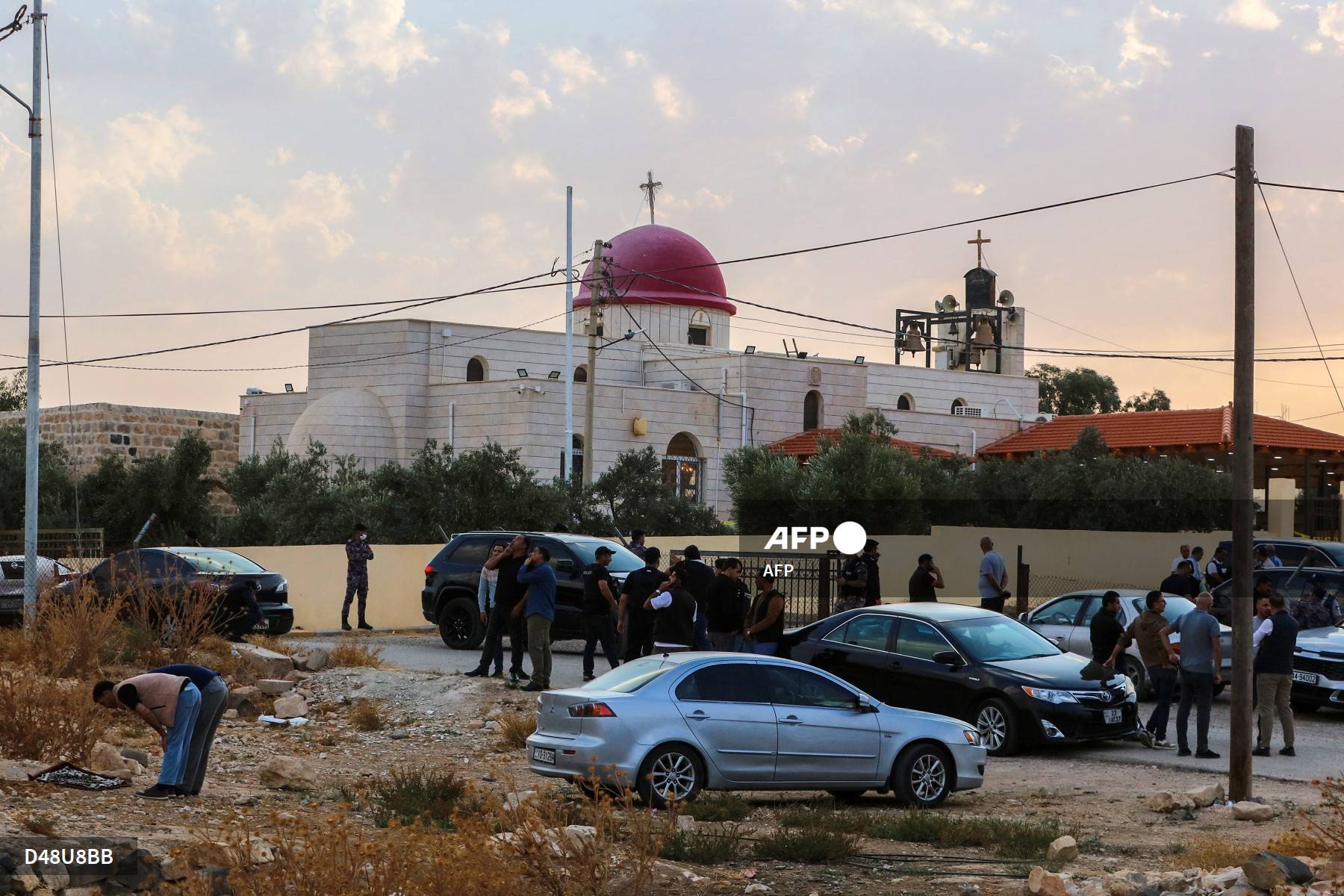
The terrorist attack on a church in Hamoud, Karak, on Oct. 23 was more than an act of violence against a religious community. It was an assault on the foundations of Jordanian society, on the principle of shared citizenship and on generations of Muslim-Christian coexistence that have helped shape the kingdom’s national identity.
When gunmen opened fire on mourners attending a funeral at St. George’s Greek Orthodox Church, killing nine people and injuring dozens, they targeted people gathered to mourn their dead. The choice of a funeral and a place of worship made the crime particularly disturbing. It was an attack on human life, religious sanctity and the basic right of citizens to practice their faith and gather in peace.
But the response from Karak and across Jordan demonstrates something the perpetrators may have underestimated: the bonds between Muslims and Christians are far deeper than religious differences and cannot easily be broken by violence.
Some of the most powerful images following the attack did not come from official statements or political speeches. They came from ordinary Muslim residents who rushed to support their Christian neighbors. Muslim volunteers helped clean the church after the shooting, while others stood alongside the victims’ families and visited the injured in hospital. These were not carefully staged gestures of solidarity.