

Rain is mostly a welcome guest across the Middle East but, when it comes in a short space of time and in large quantities in a place where the infrastructure is not equipped for that, then it turns into a nightmare of flooding and overflowing sewage.
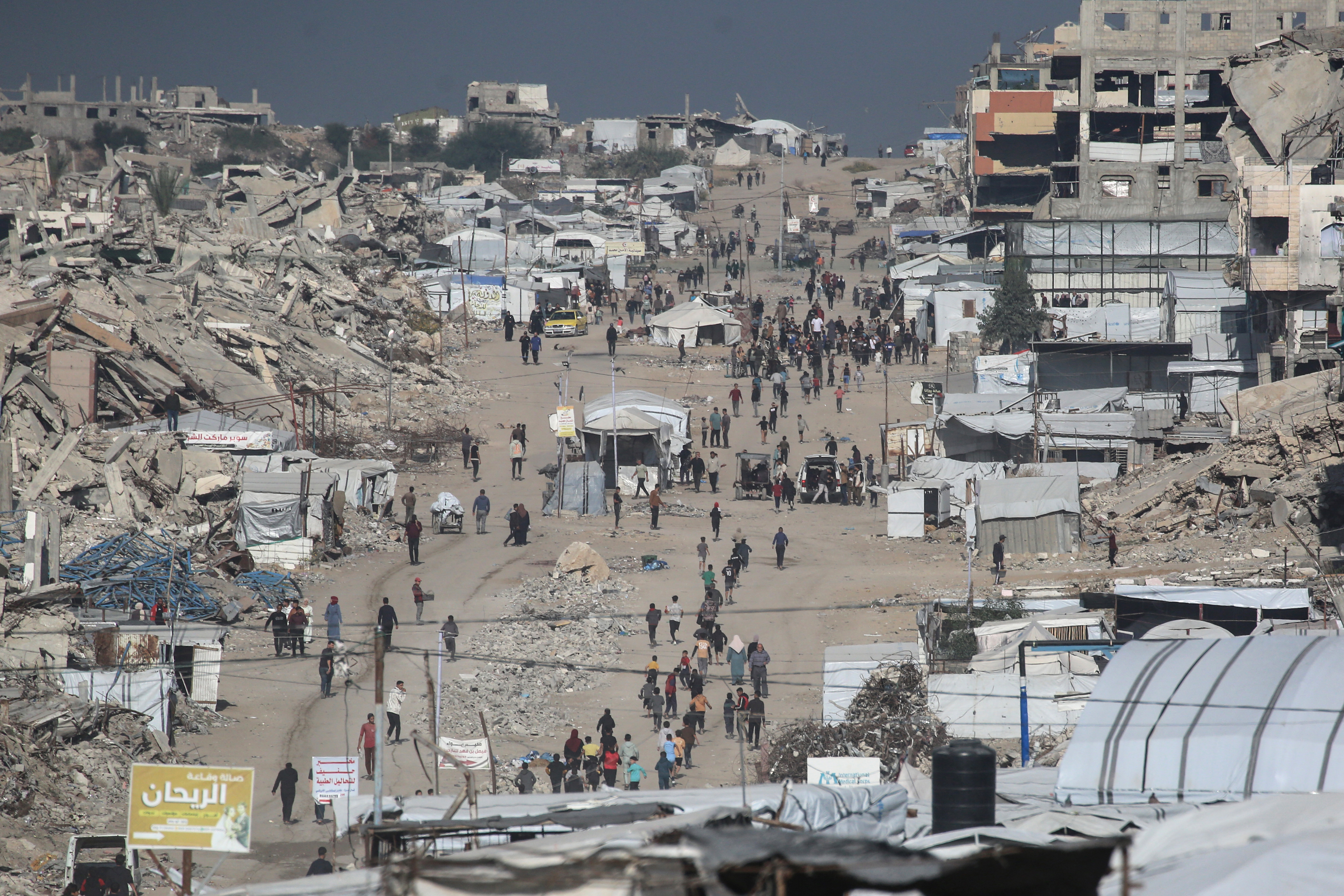
In Gaza, not much of the Strip’s already crippled infrastructure has been left intact after three years of war and constant Israeli bombardment. When the rain began hammering down earlier this month on this stricken, tiny strip of land, which is the home of more than 2 million people, most of them displaced, it had dire consequences for tens of thousands of Gazans. Their makeshift shelters were damaged or destroyed, a collapsed sandbank killed at least five people, and floodwater and sewage destroyed food stocks stored in tents.
More than a year after a so-called ceasefire deal was reached between Israel and Hamas, these are the living conditions in the Gaza Strip: camps of what are referred to as tents, when many are no more than plastic sheets or some other improvised shelter, exposed to the elements and with limited access to clean water, sanitation, food or health services.
When a ceasefire, based on US President Donald Trump’s 20-point peace plan, was agreed in October of last year, there was some hope for progress…