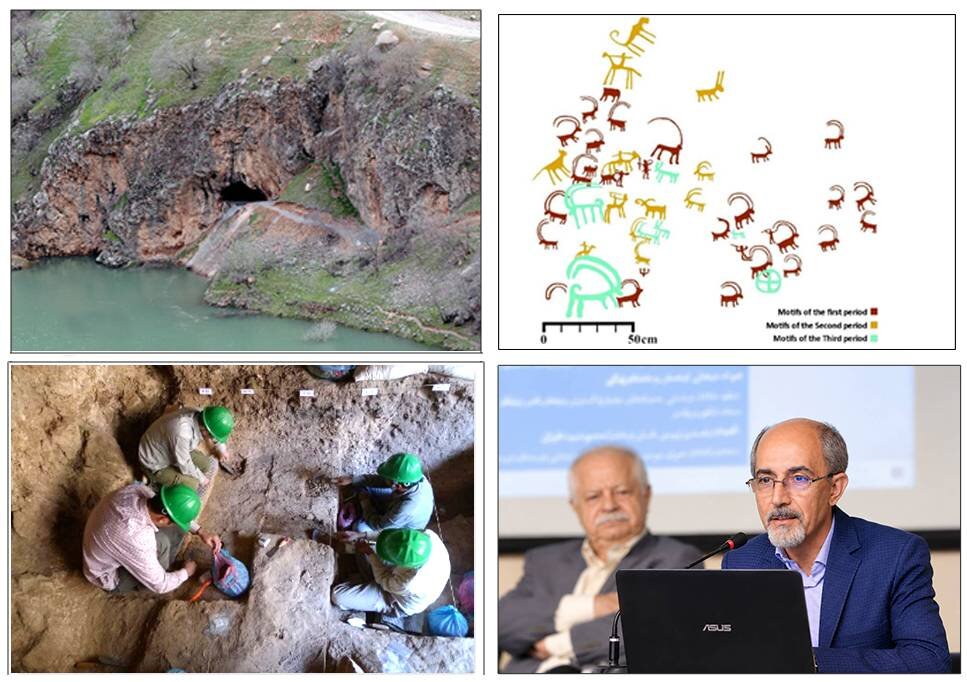
TEHRAN – Archaeological investigations in Sirwan Valley have uncovered evidence of human presence dating back more than 70,000 years, shedding light on the region’s long history of human occupation and cultural development, a National Museum of Iran archaeologist said. The valley forms part of the Cultural Landscape of Oramanat/Hawraman, a UNESCO World Heritage site in western Iran.
Fereidoun Biglari, head of the museum’s Paleolithic Department, presented the findings at a conference titled “Hawraman: The Cultural Landscape of Oramanat,” held on Monday, November 23, at the Research Institute of Cultural Heritage and Tourism.
In a presentation entitled “The Archaeological Landscape of the Sirwan Valley, with Emphasis on the Findings of the Salvage Excavations in the Darian Dam Area,” Biglari reviewed the history of archaeological research in Hawraman, focusing on surveys and rescue excavations conducted in the area affected by the Darian Dam project.
Archaeological surveys carried out in 2015 and 2016 identified more than 70 archaeological and potential sites across the region. The discoveries included caves, rock shelters, open-air settlements, cemeteries, rock art sites, castles, bridges and an ancient mountain road, highlighting the archaeological diversity of the Sirwan Valley.
Of these locations, 16 sites threatened by the planned reservoir underwent salvage excavations. They included open-air sites, caves, rock shelters and cemeteries.