

Archaeologists working in northeastern France have uncovered 28 ancient Gallic coins in a small pit beside fragments of a human skull and a miniature bronze wagon wheel, a combination that suggests the site may have been a Late Iron Age sanctuary. The finds were made during preventive excavations near Bure in the Meuse department, an area being investigated in connection with France’s Cigéo deep geological repository project, as per reports by Inkorr and The History Blog.The discovery is significant because the objects appear to have been deliberately deposited rather than casually lost. The coins, known as potins, were found alongside human bone fragments and a five-centimetre metal wheel, a type of miniature object often associated with votive offerings in Iron Age Gaul. Researchers believe the site may have served a ritual purpose for the Leuci, a Gallic people who lived in the region during the Late La Tène period. Read more about it, as per the reports, here:What was foundThe excavation revealed a building measuring about 7.5 by 5.5 metres. Archaeologists identified four large postholes, each roughly one metre in diameter and more than 80 centimetres deep. The arrangement suggests that the posts may have leaned inward, possibly forming a conical structure rather than a conventional rectangular building.Inside one of the postholes, researchers recovered fragments of a human skull and…
28 ancient Gallic coins and skull fragments hint at lost sanctuary in France
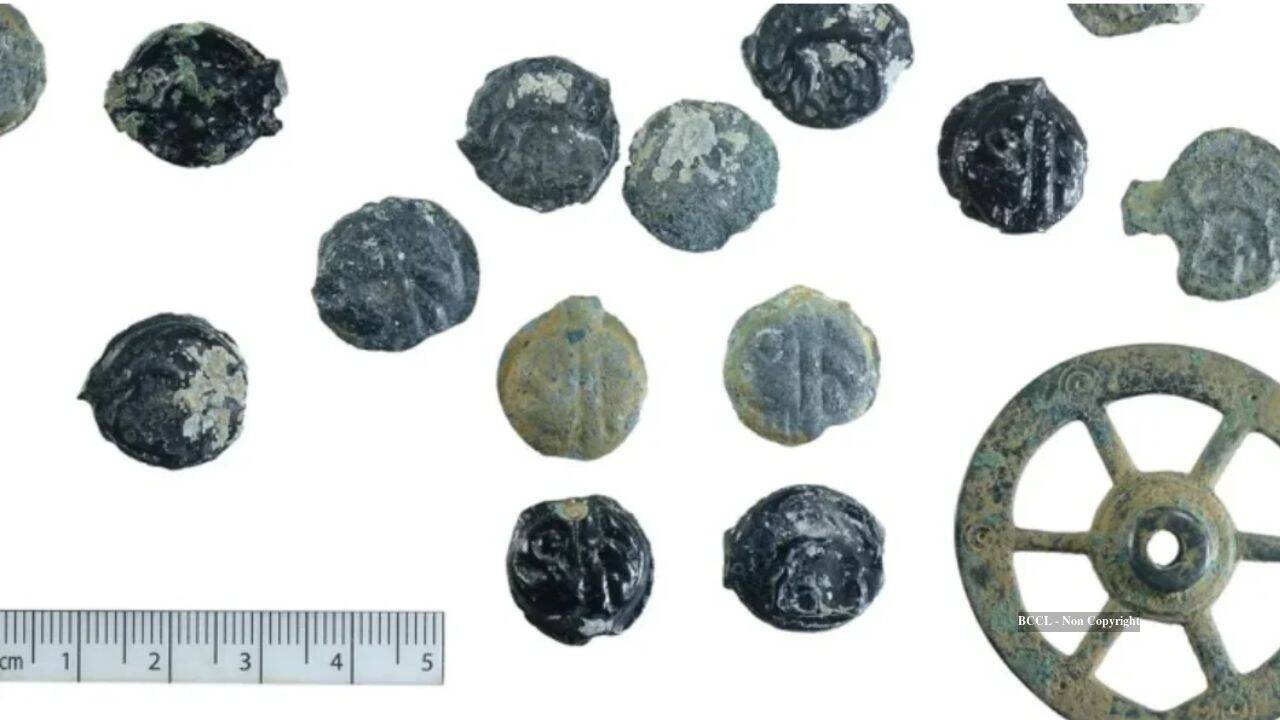
Archaeologists exploring Bure in northeastern France uncovered 28 ancient Gallic coins alongside human skull fragments. The site is believed to be a Late Iron Age sanctuary used by the Leuci. In addition to the coins, a miniature bronze wagon wheel was also found, suggesting ritual significance. The discovery contributes to understanding the cultural and religious practices of ancient Gaul. Ongoing studies aim to…
In brief
Archaeologists working in northeastern France have uncovered 28 ancient Gallic coins in a small pit beside fragments of a human skull and a miniature bronze wagon wheel, a combination that suggests the site may have been a Late Iron Age sanctuary. The coins, known as potins, were found alongside human bone fragments and a five-centimetre metal wheel, a type of miniature object often associated with votive offerings in Iron Age Gaul.
This is the opening of the story, shared with credit to The Times of India — World. The rest of the report — with every detail — continues on the publisher’s website.
Continue reading at The Times of India — World ↗