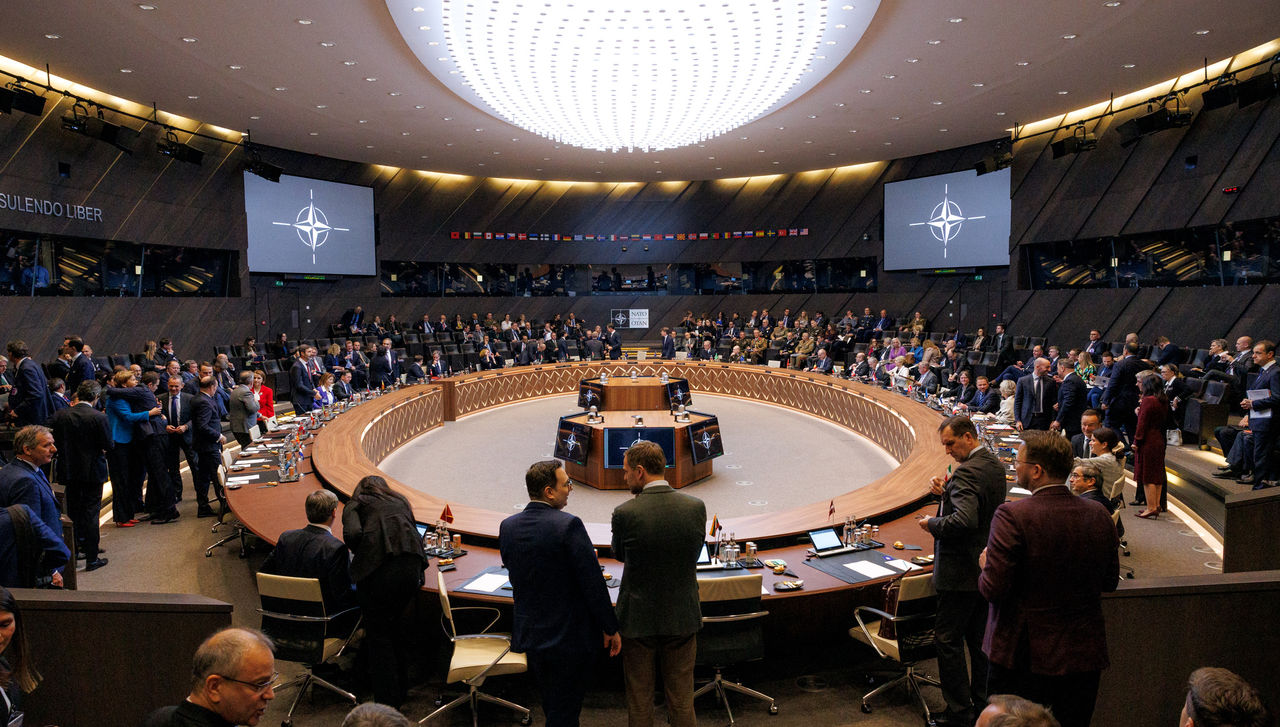
A packed agenda awaits foreign ministers from the 32 NATO countries when they meet in Brussels on Dec. 2. First and foremost, the US is expected to brief its allies on the future of US forces in Europe. There will also be discussions about progress toward meeting the defense spending targets agreed at the 2025 NATO summit in The Hague and the defense industrial cooperation pledged during the most recent alliance summit in Ankara in July. There is another area, however, that, considering current geopolitical circumstances, deserves more attention: NATO’s relations with the Gulf states.
The Istanbul Cooperation Initiative was established at the 2004 NATO summit in Istanbul to serve as the alliance’s main platform for engagement with the Gulf states. Currently, only four of the six GCC countries — Kuwait, Bahrain, Qatar, and the UAE — formally participate in the initiative, although Saudi Arabia and Oman take part in selected ICI activities.
Perhaps the most notable accomplishment of this initiative has been the establishment of the NATO-ICI Regional Center in Kuwait in 2017, which serves as a tangible link between NATO and the Gulf states. There have also been numerous high-level exchanges, simulated war games and training exercises in the two decades since the ICI’s creation.