Uzbekistan and Kazakhstan have reopened one of Central Asia's busiest border crossings after nearly two years of reconstruction, with upgraded facilities designed to accommodate up to 100,000 travellers a day during peak periods.The reopening comes as Central Asia's two largest economies strengthen their trade and tourism links and the European Union seeks to develop more efficient transport connections with the region.On 16 November, representatives from the EU, Central Asia, the South Caucasus and the Black Sea region met in Brussels to advance cooperation on transport, energy and digital infrastructure.A key priority for the European Commission is the development of the Middle Corridor, connecting Central Asia with European markets across the Caspian Sea and the South Caucasus. The Commission aims to triple trade flows along the route and significantly reduce freight transit times by 2030.Located just outside the Uzbek capital, Tashkent, the Gishtkuprik–Zhibek Zholy checkpoint reopened on 25 November. It recorded more than 11 million passenger crossings in 2024, averaging around 30,000 a day.Easing pressure on regional freight routesAlthough the reopened checkpoint serves pedestrians, passenger cars and buses rather than trucks, its modernisation could also benefit freight transport between Uzbekistan and Kazakhstan.During its closure, passenger vehicles were diverted to the neighbouring Navoi checkpoint, which was originally built to accommodate freight traffic. Truck access there was temporarily restricted.According to Uzbekistan's Customs Committee…
Uzbekistan and Kazakhstan reopen key border crossing for up to 100,000 travellers a day
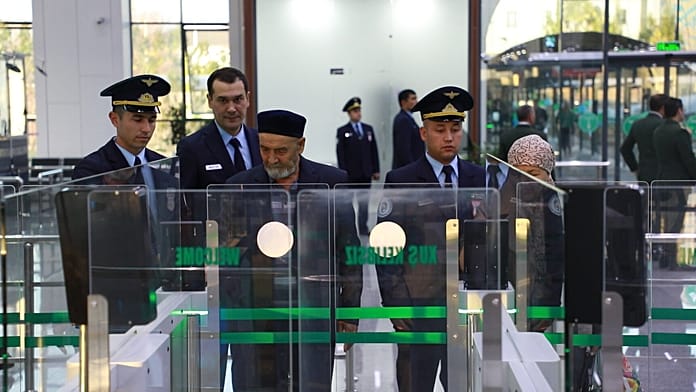
The reopening comes as the EU seeks stronger transport and trade links with Central Asia. The upgraded checkpoint could also ease pressure on regional freight routes and support cross-border tourism.
In brief
Uzbekistan and Kazakhstan have reopened one of Central Asia's busiest border crossings after nearly two years of reconstruction, with upgraded facilities designed to accommodate up to 100,000 travellers a day during peak periods.The reopening comes as Central Asia's two largest economies strengthen their trade and tourism links and the European Union seeks to develop more efficient transport connections with the region.On 16 November, representatives from the EU, Central Asia, the South Caucasus and the Black Sea region met in Brussels to advance cooperation on transport, energy and digital infrastructure.A key priority for the European Commission is the development of the Middle Corridor…
This is the opening of the story, shared with credit to Euronews. The rest of the report — with every detail — continues on the publisher’s website.
Continue reading at Euronews ↗