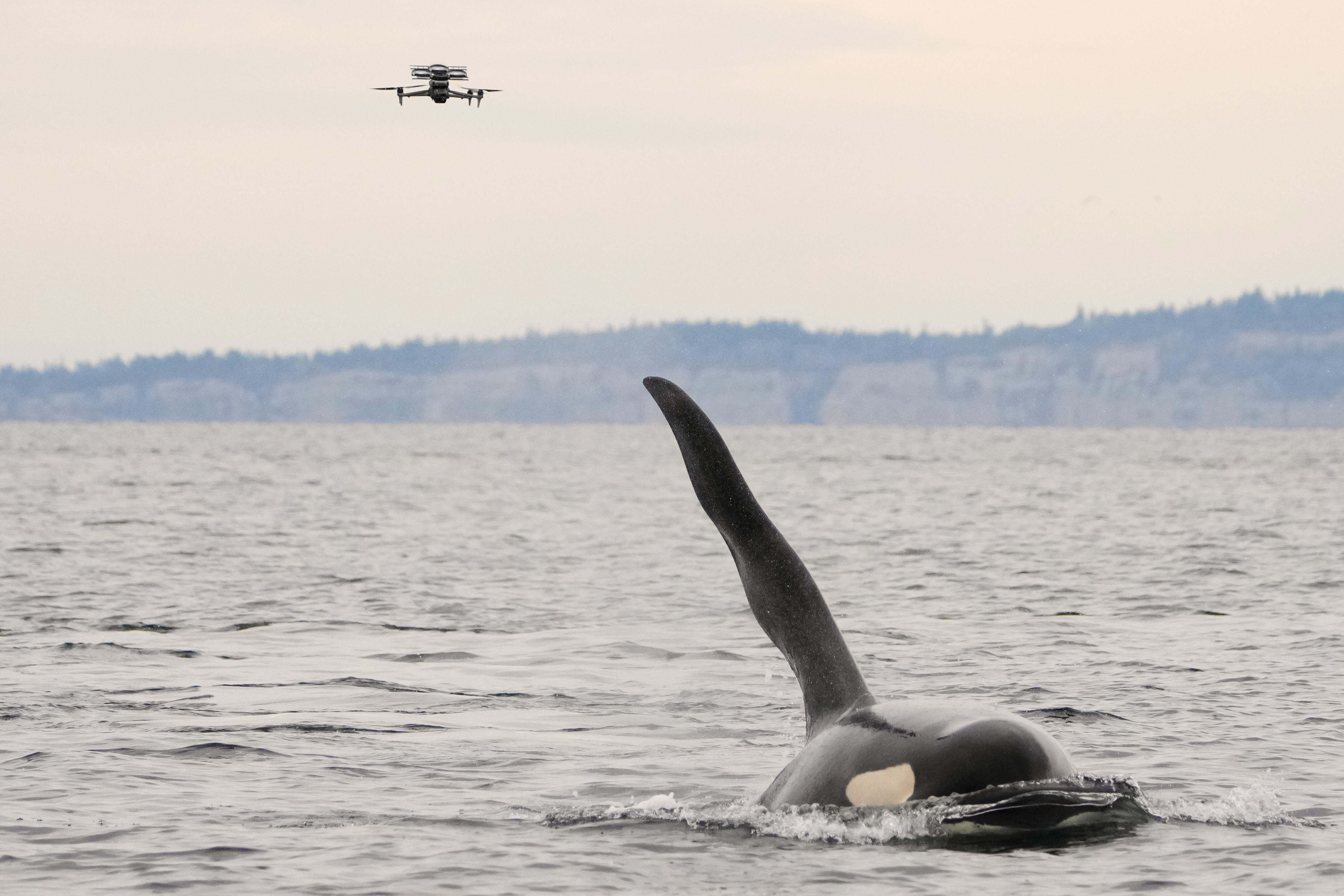
WASHINGTON: Every fall for the last few years, Deborah Giles starts her work day with one question in mind: Where are the orcas?
Giles is tracking the Southern Resident killer whales, an endangered species whose population recovery is faltering despite years of protection. In their search for their dwindling food source, the whales are spending less time in the Salish Sea, the maze of inland waters between Washington State and British Columbia. But in the last half-decade, the orcas have been hunting coho and chum salmon just north of Seattle during the fall.
It’s providing an opportunity for collaboration between The SeaDoc Society and the San Diego Zoo Wildlife Alliance. They’re using drones mounted with petri dishes and microscope slides to collect droplets from whale spouts and employing a poop-sniffing dog to find stool samples, providing much-needed wellness checks for as many of the 76 remaining whales as they can find.
“They were here before us, long before us,” said Giles. “They’re a group of animals that are uniquely bonded to this place and to each other.”
Before colonization of the Pacific Northwest, the orca’s main prey — Chinook salmon — could weigh more than 100 pounds (45.36 kilograms) and their numbers were abundant along the West Coast, Giles said.