

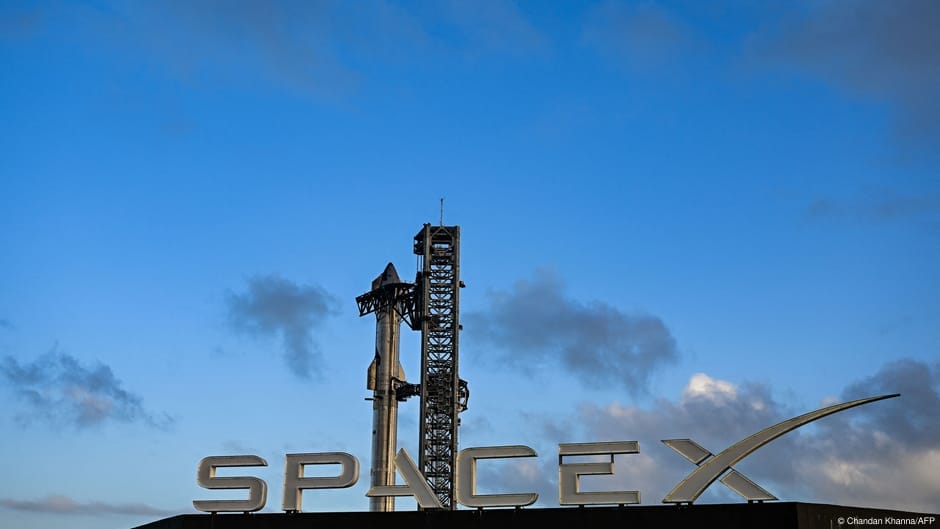
Elon Musk's space company SpaceX has got the green light from the US Federal Communications Commission (FCC) to build a network of 1 million satellites designed to host AI data centers in space. The project is called "Starmind."
Official approval comes with an ambitious timeline: SpaceX must have 10%, or 100,000, of the authorized satellites in orbit by 2035. By 2038, that figure must reach 50%. Within 15 years, a total of 1 million satellites are expected to orbit Earth, helping meet the rapidly growing demand for artificial intelligence computing power.
"Putting data centers onto satellites and into space is somewhat attractive due to the higher availability of solar energy," Ulrich Speidel of the University of Auckland's School of Computer Science in New Zealand told the Science Media Center.
Depending on a satellite's orbit, it would be exposed to sunlight for more than half the day, Speidel said. And, of course, there are no clouds in space.
SpaceX makes a similar argument, saying its satellites would take advantage of space's plentiful energy and cooling possibilities, reducing the burden on Earth.
Electricity consumption by AI data centers is indeed rising worldwide. According to the International Energy Agency (IEA), their consumption could more than double to 945 terawatt-hours per year by 2030.