📰 Newspapers

Netanyahu proposes Israeli unity government where rival Eisenkot becomes PM first

Netanyahu proposes Israeli unity government where rival Eisenkot becomes PM first

Eisenkot has responded by inviting Netanyahu to "genuine and accelerated negotiations" at his hotel.

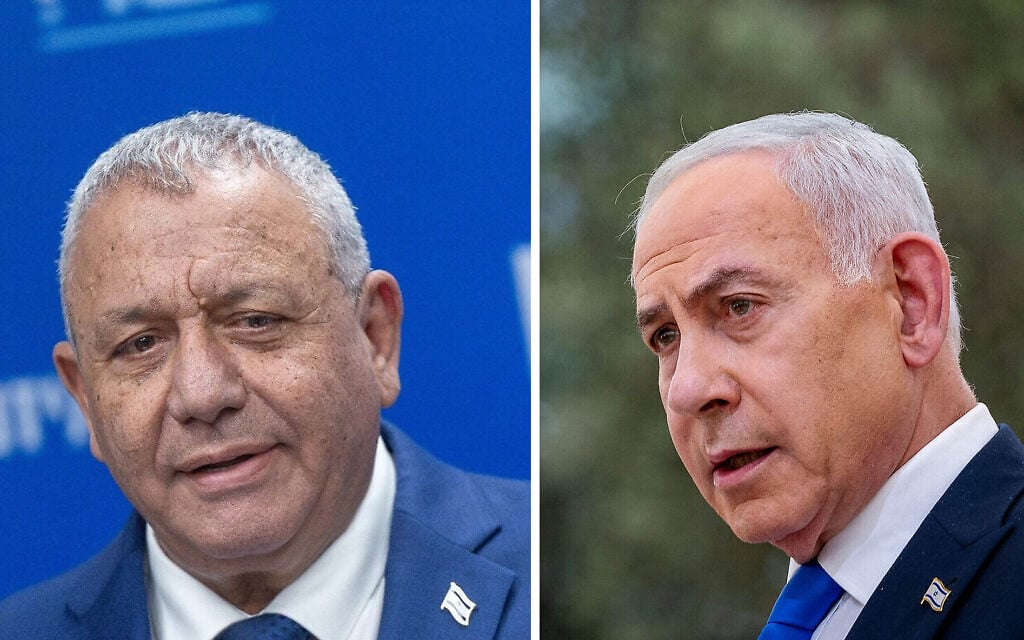
Benjamin Netanyahu has said he will agree to Israeli opposition leader Gadi Eisenkot becoming prime minister first as part of a rotating national unity government.

In a social media post on Saturday, Netanyahu said "my responsibility as a leader obligates me to put everything aside, including the principle of the largest party", adding he would initially serve as an "alternate prime minister".

Eisenkot, tasked earlier this month with forming a government within 28 days by Israel's President Isaac Herzog, swiftly responded by inviting caretaker Prime Minister Netanyahu to "genuine and accelerated negotiations".

It comes after Eisenkot accused Netanyahu's right-wing Likud party on Friday of stalling coalition talks ahead of the 6 December deadline.

Eisenkot's centrist Yashar party and three other Jewish opposition parties won 48 seats in October's election. Netanyahu's bloc won 53, with both short of a majority in the 120-seat Knesset.

Herzog said he consulted all parties during the week after the election before he gave former army chief Eisenkot first chance to form a government.

Two Arab-led alliances, the United Arab List and the Joint List, together won an unprecedented 19 seats following a surge in turnout among Arab voters.

That has positioned them as potential kingmakers, however, all but one of the Jewish parties pledged before the polls not to work with them to form a…
In brief

Benjamin Netanyahu has said he will agree to Israeli opposition leader Gadi Eisenkot becoming prime minister first as part of a rotating national unity government. Eisenkot, tasked earlier this month with forming a government within 28 days by Israel's President Isaac Herzog, swiftly responded by inviting caretaker Prime Minister Netanyahu to "genuine and accelerated negotiations". Eisenkot's centrist Yashar party and three other Jewish opposition parties won 48 seats in October's election.

This is the opening of the story, shared with credit to BBC News — Top Stories. The rest of the report — with every detail — continues on the publisher’s website.

Continue reading at BBC News — Top Stories ↗

Cookie settings

Choose which cookies we may use. You can change this at any time from Cookie settings in the footer. Details of each cookie are in the Cookie Policy.

Strictly necessary

Needed for sign-in, security, payments and remembering these choices. Always on.

Preferences

Remember settings such as dark mode.

Analytics & performance

Help us count visits, understand which pages, devices and countries our readers use, and measure how well the site performs – anonymous and aggregated.

Advertising & marketing

Lets advertising partners show and personalise adverts, measure impressions, clicks and visits, prevent ad fraud and pay us – this is how the free site is funded.

🔔 News notifications

Get headlines from NewsHub on this device — even when the site is closed.

You can switch this off at any time. Works on Android, Windows, Mac and Linux browsers; on iPhone/iPad add the site to your Home Screen first.