

Starting this Sunday, new cars and small utility vehicles will be, for the first time, regulated on the particles emitted by tyres and brake wear.The Euro 7 standard has been implemented this Sunday, maintaining the Euro 6 standard still in force concerning carbon emissions from car exhausts. But European law has been tightened over particulate matter resulting from tyre abrasion and dust emitted during braking.The European Commission estimates that tyre emissions represent the main source of microplastics released into the environment. While carbon emissions are set to gradually decrease by 2050 thanks to the electrification of European vehicles limit set by the EU by 2035, tyres and brakes remain a source of fine particles.Brakes and tyres under scrutinyBraking and tyre wear are estimated to account for up to 90 per cent of all particles emitted by road transport in the near future.The European Commission has now set specific limits: every car fitted with conventional brakes will have to limit its fine particle emissions to 7 mg/km, whilst fully electric models— which are often equipped with energy-recovery systems that reduce the need for conventional braking — will have to reduce their emissions to just 3 mg/km.The Euro 7 regulations introduce specific tests to measure tyre wear emissions, with the hope of encouraging manufacturers to innovate through new materials and their durability.The…
New cars to comply with European law regulating brakes, tyres and battery wear
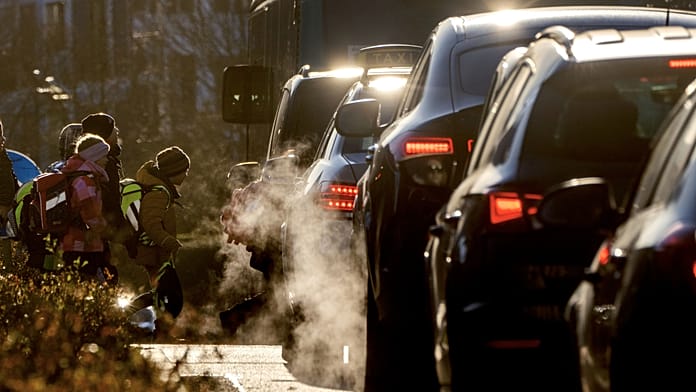
The newly implemented Euro 7 standard doesn't tighten carbon emissions regulations from car exhaust but focuses on brakes, tyres and batteries.
In brief
Starting this Sunday, new cars and small utility vehicles will be, for the first time, regulated on the particles emitted by tyres and brake wear.The Euro 7 standard has been implemented this Sunday, maintaining the Euro 6 standard still in force concerning carbon emissions from car exhausts. But European law has been tightened over particulate matter resulting from tyre abrasion and dust emitted during braking.The European Commission estimates that tyre emissions represent the main source of microplastics released into the environment. While carbon emissions are set to gradually decrease by 2050 thanks to the electrification of European vehicles limit set by the EU by 2035, tyres and bra…
This is the opening of the story, shared with credit to Euronews. The rest of the report — with every detail — continues on the publisher’s website.
Continue reading at Euronews ↗