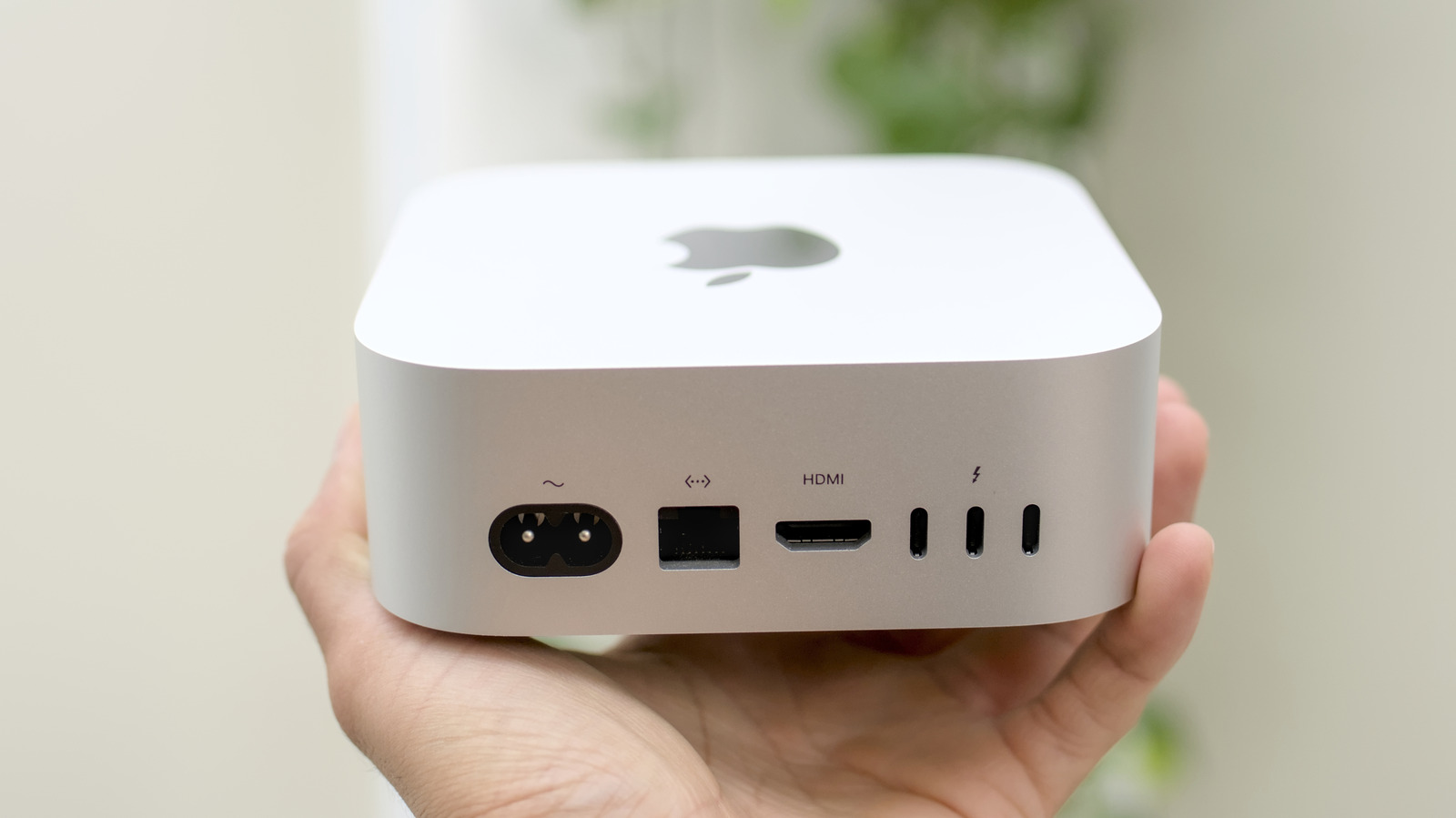
It's not the best performer out there, but it offers pretty solid bang for the buck.
Privacy is a major concern when using AI cloud platforms like ChatGPT and Claude. Local AI models can provide greater control over your data while also letting you choose and customize models according to your requirements. Moreover, they eliminate the need for chatbot subscriptions and token limits imposed by cloud services. However, running AI locally often requires significant computational power, and memory capacity can be a major bottleneck when working with large models. This is one area where Apple's Mac mini lineup can be appealing, as it can accommodate models that exceed the VRAM capacity of many desktop GPUs.
Apple Silicon Macs incorporate a unified memory architecture, which allows the CPU and GPU to share the memory pool. With the Mac mini offering memory configurations ranging between 16GB and 64GB, these machines are capable of accommodating larger AI models than conventional desktop GPUs. However, memory capacity alone doesn't determine a model's performance; memory bandwidth, computational power and software support play an equally important role.
Mac mini's memory bandwidth pales in comparison to the high-bandwidth video memory on discrete desktop GPUs. It also falls short in raw GPU performance when handling demanding AI workloads.