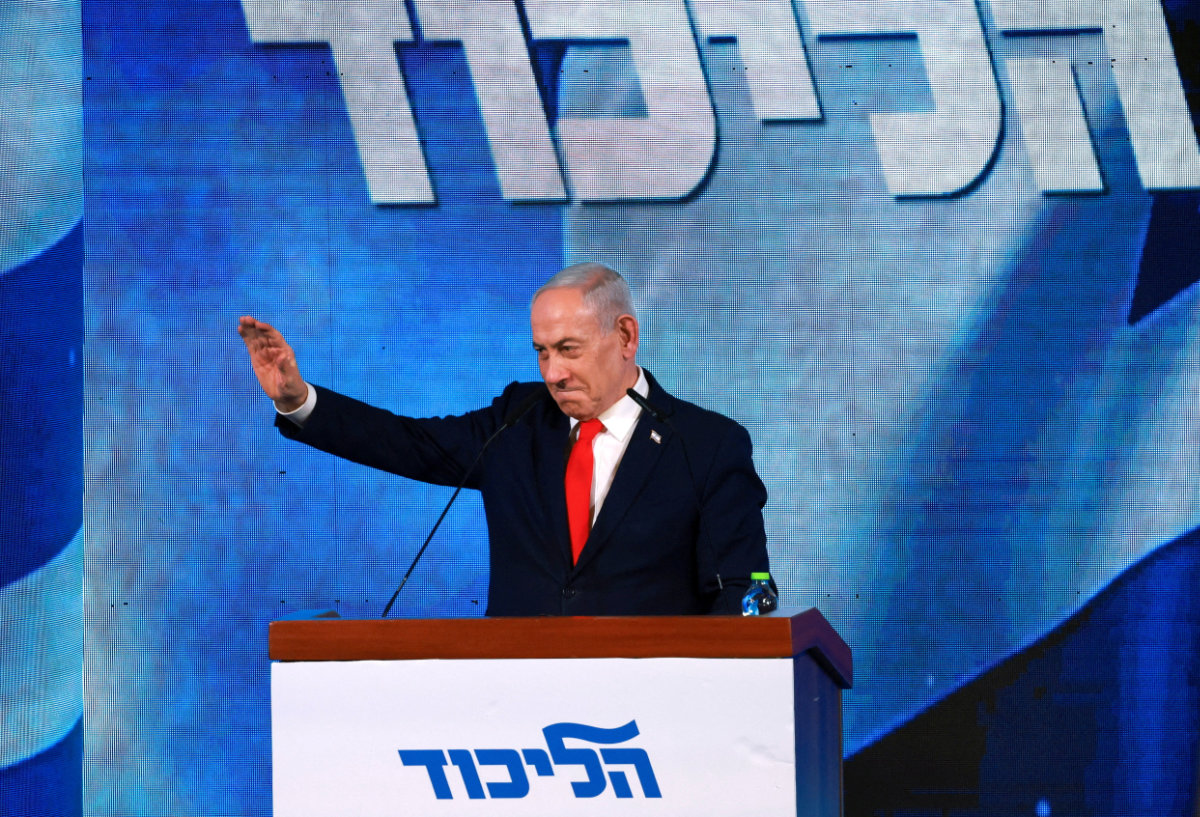
Commentators have declared Benjamin Netanyahu to be finished many times over the past two decades and yet he has always made a comeback. This time, the calculus could be different. In the space of a week, Israel’s longest-serving prime minister suffered two electoral blows. At home, his bloc won 53 seats in the 120-seat Knesset and lost its majority, while in the US, the Republican Party he bet on suffered a sweeping midterm defeat.
With no realistic path to forming a government, Netanyahu’s chances of preventing his opponent, former general Gadi Eisenkot, from becoming the next prime minister appear slim. His best bet would be to survive and bide his time, hoping Eisenkot’s partners’ internal squabbling will make any government short-lived and lead to early elections next spring.
In Washington, US Vice President J.D. Vance said the Iran war cost Republicans votes and he listed changing America’s relationship with Israel among voters’ demands. President Donald Trump acknowledged the war hurt his party, while defending it. US officials believe Netanyahu is to blame for convincing Trump to attack Iran. As Americans voted, Trump announced an end to $4 billion in annual aid from 2027, because “they don’t need it.” He called it a deal with Netanyahu, yet the Israeli prime minister’s spokesperson said they were unaware of the details.