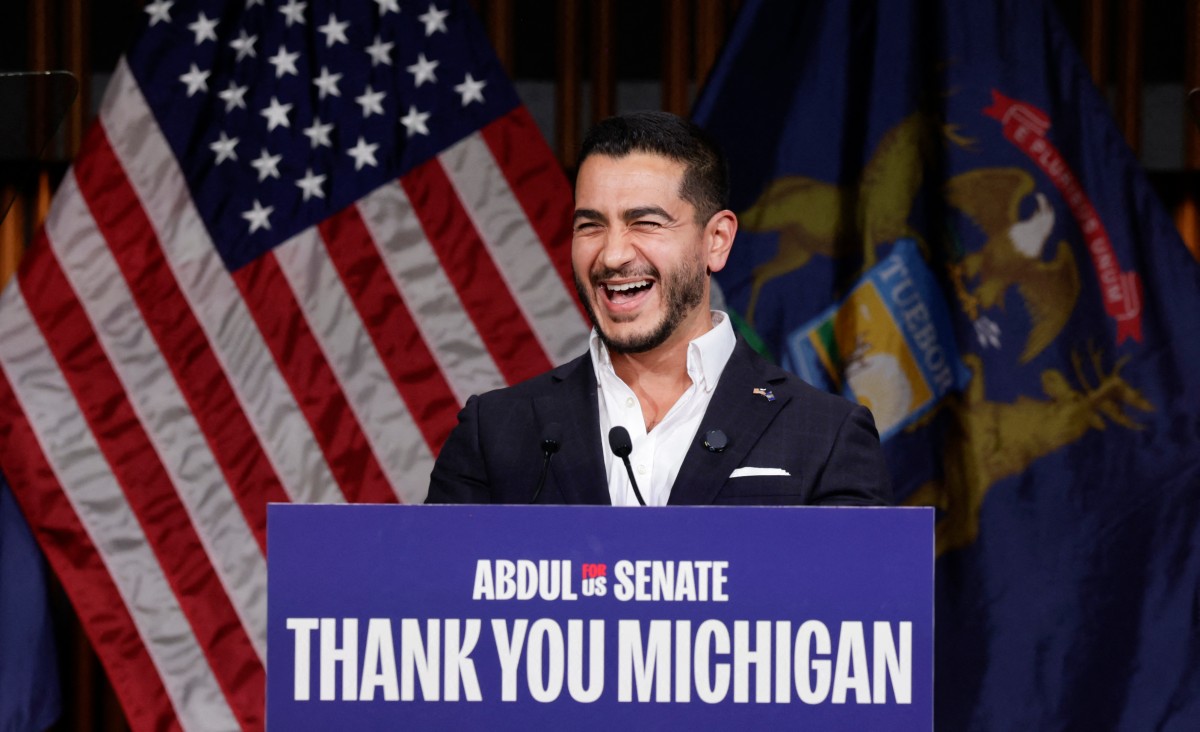
The Arab argument over Abdul El-Sayed’s election to the US Senate says as much about our expectations as it does about his victory. Some have celebrated as though an Arab government had gained a seat in Washington. Others have treated any expression of pride as proof of political ignorance. Between the enthusiasm and the ridicule, there has been too little scrutiny of what he actually stands for.
A politician’s ancestry is an unreliable guide to the policies he will pursue. Yet much of this debate has proceeded as though an Egyptian name were a foreign policy commitment, waiting only for its owner to take office.
El-Sayed is an American politician of Egyptian descent. Born and raised in Michigan, he is a physician and former public health official who has become the first Muslim elected to the Senate. His mandate comes from Michigan’s voters. His responsibilities will be to his state and country and his decisions will reflect his political convictions and his understanding of American interests.
His family’s origins may shape his outlook. They do not place him under any obligation to support Cairo’s policies or those of another Arab capital. Nor would disagreement with those policies make him less Egyptian by ancestry. The mistake begins when cultural affinity is treated as a political guarantee.