
Rare and vulnerable rays in Greece's Thermaic Gulf are being given a greater chance of survival through a new marine biodiversity protection initiative.A Euronews camera captured the first movements of a newborn Kalkanovatos ray just a few minutes after it hatched in a specially designed aquarium in Halkidiki.Its egg, together with four others, had been found in fishermen's nets and transferred to a specially designed aquarium. There, the eggs were kept under controlled conditions, with a specialised scientific team monitoring their development up to the moment of hatching and beyond. The initiative is part of the Thermaikos Biodiversity Project, a programme to protect biodiversity in the northern Aegean.This specific action seeks to address 'by-catch', when fishing operations haul in unintended marine life. When a female ray is accidentally caught in the nets, the stress may cause it to expel its eggs, which often end up in the sea without any chance of completing their development.Newborn rays are monitored and then returned to the wildIn the specially designed aquarium, located within the facilities of the Sani hotel on the Kassandra peninsula, special care is taken to replicate the environmental conditions of the surrounding sea. The aim is to ensure the appropriate temperatures and conditions first for hatching and then for the survival of the newborn rays.As João Bernardo, the scientific coordinator…
'Second chance of survival': Newborn stingray takes first swim before being released back into wild
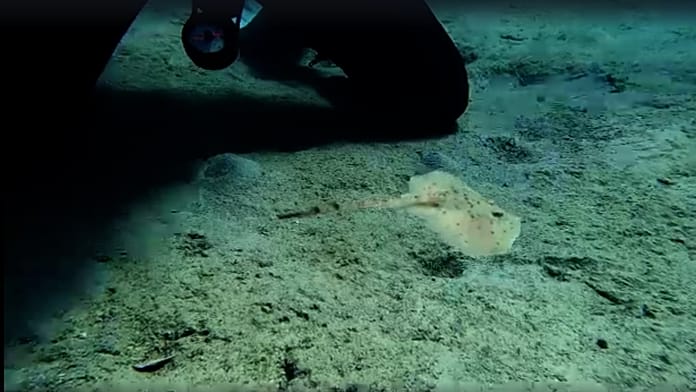
Rays are often accidentally caught in fishing nets, which can cause females to expel their eggs. This Portuguese project gives pups a second chance.
In brief
Rare and vulnerable rays in Greece's Thermaic Gulf are being given a greater chance of survival through a new marine biodiversity protection initiative.A Euronews camera captured the first movements of a newborn Kalkanovatos ray just a few minutes after it hatched in a specially designed aquarium in Halkidiki.Its egg, together with four others, had been found in fishermen's nets and transferred to a specially designed aquarium.
This is the opening of the story, shared with credit to Euronews. The rest of the report — with every detail — continues on the publisher’s website.
Continue reading at Euronews ↗