
How can vegetables be grown in a place with no habitable atmosphere, no fertile soil and no freely available water?This is exactly what the international Project Lunar Agriculture Module - Ground Test Demonstrator (LAM-GTD) (source in German) is about.The German Aerospace Center (DLR) is working together with NASA and the Canadian Space Agency CSA on concepts for greenhouses on the Moon. These are initially intended to supply astronauts on future long-term missions with fresh food.A greenhouse as life insurance in spaceTemperatures on the Moon fluctuate extremely, its surface is almost airless, water is scarce and cosmic radiation poses a considerable danger. Simply putting plants into lunar soil is not an option. Controlled cultivation systems are needed that can operate independently of natural environmental conditions.The idea is that a greenhouse module will be directly connected to a simulated living and working area for astronauts. This would allow researchers not only to study plant growth, but also to test how the greenhouse and habitat can supply each other.The planned demonstrator is to be built entirely on Earth to begin with. By 2032 at the latest the three partners want to decide whether and how it will actually be constructed.NASA in particular has already carried out numerous experiments of this kind on the International Space Station ISS.
DLR, NASA and CSA plan lunar greenhouse to grow vegetables for astronauts
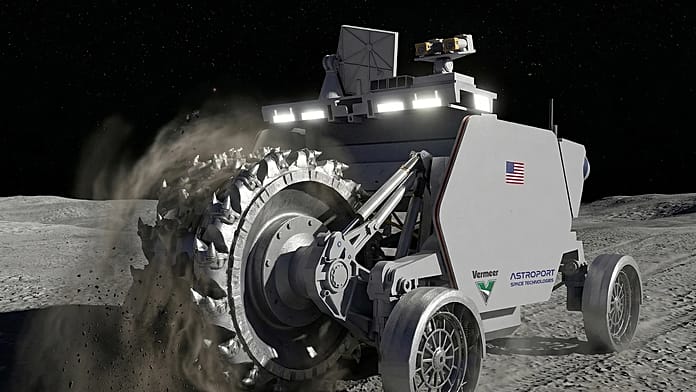
What sounds like science fiction is becoming a concrete research project: the German Aerospace Center (DLR), together with NASA and the Canadian Space Agency CSA, is developing a concept for greenhouses on the Moon.
In brief
How can vegetables be grown in a place with no habitable atmosphere, no fertile soil and no freely available water?This is exactly what the international Project Lunar Agriculture Module - Ground Test Demonstrator (LAM-GTD) (source in German) is about.The German Aerospace Center (DLR) is working together with NASA and the Canadian Space Agency CSA on concepts for greenhouses on the Moon.
This is the opening of the story, shared with credit to Euronews. The rest of the report — with every detail — continues on the publisher’s website.
Continue reading at Euronews ↗