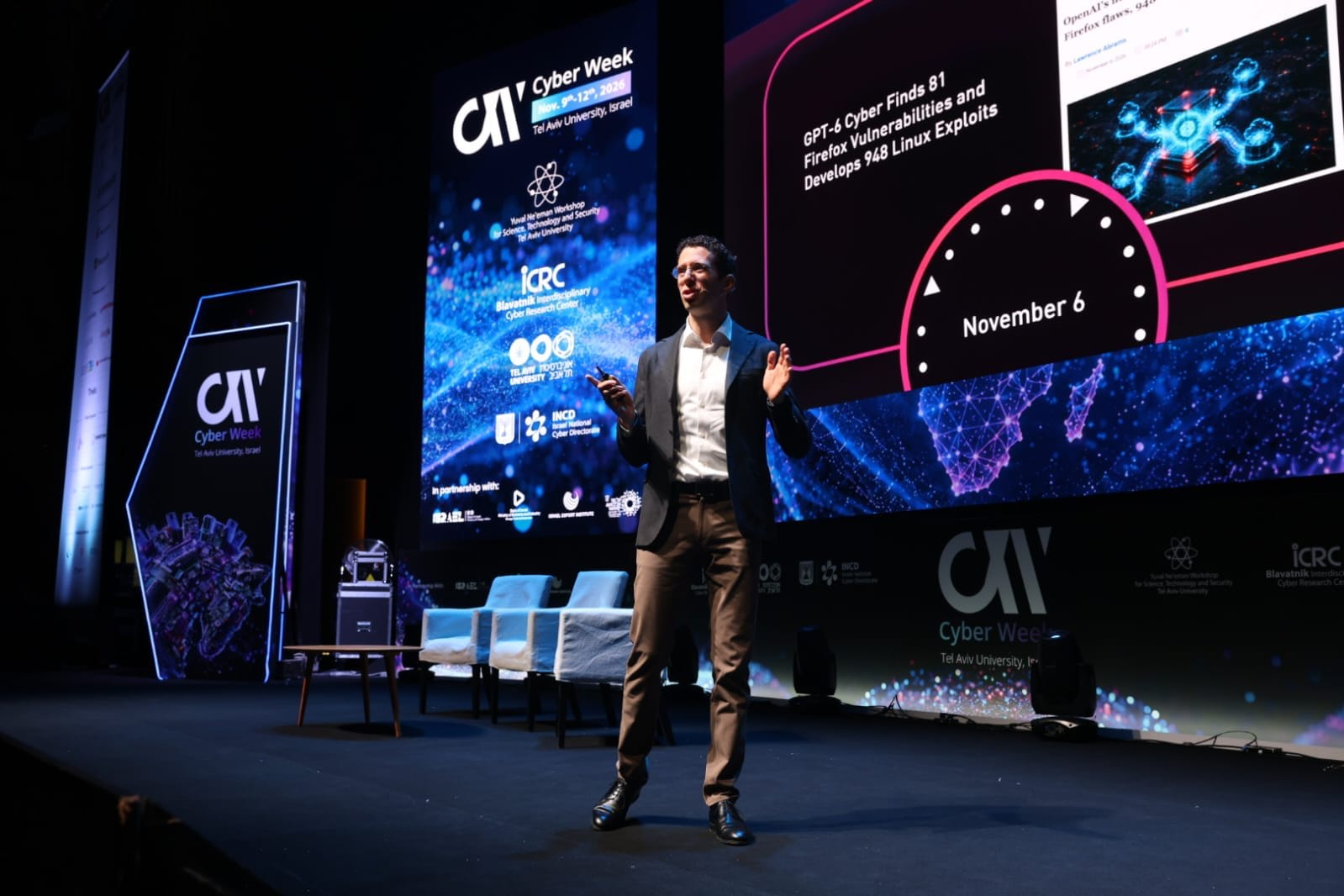
Artificial intelligence is rapidly reshaping the global cyber battlefield, lowering the barrier to sophisticated offensive operations and enabling countries such as Iran to conduct attacks that would have been difficult or impossible only a few years ago, according to Dream CEO and co-founder Shalev Hulio.Speaking during Cyber Week at Tel Aviv University and later in a discussion with journalists, Hulio said Iran's cyber capabilities have been significantly amplified by access to advanced AI models, particularly those developed in China with fewer safety restrictions."What we are seeing now is that because of AI and because of access to AI, the Iranian threat actors are becoming much more sophisticated," Hulio said. "Today, we are actually seeing them using AI to find zero-days. We see them using autonomous AI to do lateral movement in networks."According to Hulio, AI is now being used throughout the entire cyberattack lifecycle, from generating convincing phishing campaigns and social engineering attacks to identifying software vulnerabilities and navigating compromised networks without direct human intervention.One particularly concerning development is the use of AI to reverse-engineer software patches. Once vendors release updates, attackers can analyze the fixes, determine the underlying vulnerability, and rapidly identify systems that remain unpatched."When the Chinese models became available, cheap, and almost as good as the Americans', things that were not possible two years ago are now…
AI is supercharging Iran’s cyber threat, Dream CEO Shalev Hulio warns
Cheap, powerful Chinese AI is helping Iran launch more sophisticated cyberattacks, exposing a growing global security threat.
In brief
Artificial intelligence is rapidly reshaping the global cyber battlefield, lowering the barrier to sophisticated offensive operations and enabling countries such as Iran to conduct attacks that would have been difficult or impossible only a few years ago, according to Dream CEO and co-founder Shalev Hulio.Speaking during Cyber Week at Tel Aviv University and later in a discussion with journalists, Hulio said Iran's cyber capabilities have been significantly amplified by access to advanced AI models, particularly those developed in China with fewer safety restrictions."What we are seeing now is that because of AI and because of access to AI, the Iranian threat actors are becoming much more…
This is the opening of the story, shared with credit to The Jerusalem Post. The rest of the report — with every detail — continues on the publisher’s website.
Continue reading at The Jerusalem Post ↗