
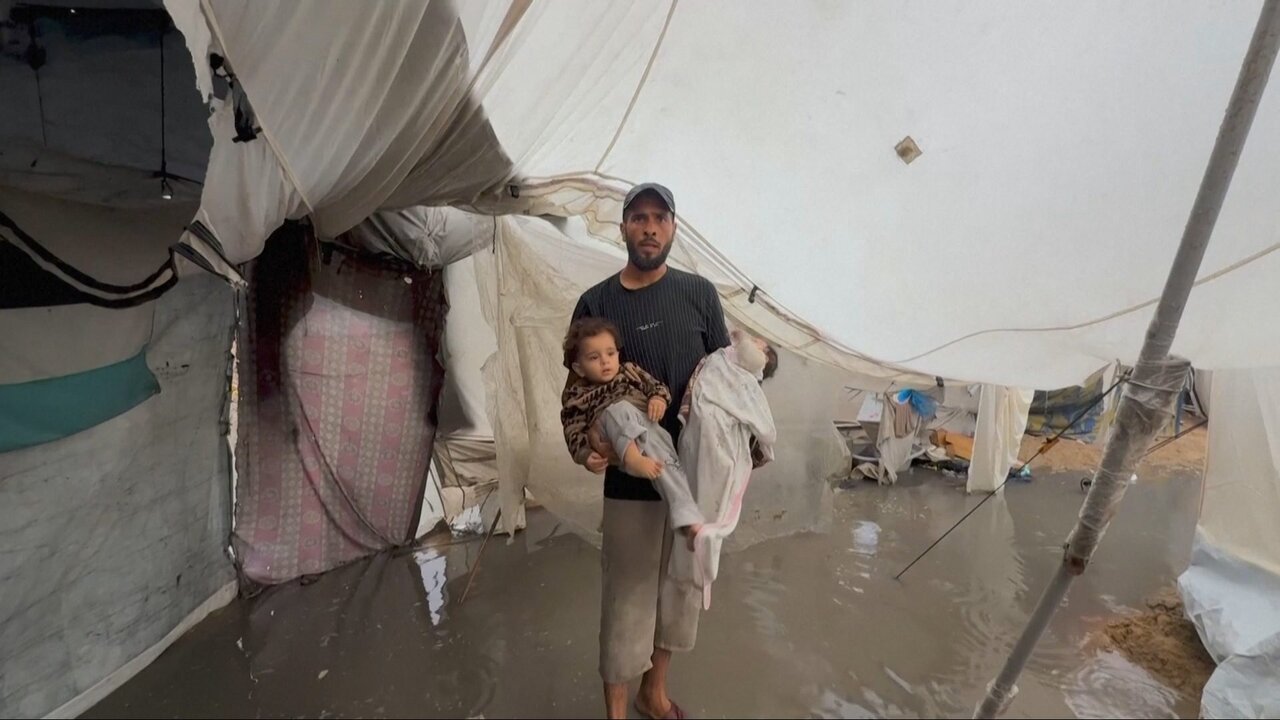
TEHRAN – When a shelter collapses in Gaza, the casualties are counted, the world moves on and the real questions go unanswered.
Most coverage treats the flooding in Gaza as a natural disaster layered onto a humanitarian one. That framing misses what the rain exposes. This is not a population caught in bad weather. It is a population the occupying regime has driven from its homes, now living in tents that were never built to keep out a storm, in a territory where the regime has destroyed most of the housing stock and infrastructure.
A tent is not a home, even if people adapt to it. Neither is it a solution to reconstruction when distributed in large numbers. It is a marker of an emergency that was supposed to end with a ceasefire.
That ceasefire was guaranteed by several states that could not deliver the guarantee, and by a guarantor like the United States, which openly backs the occupying regime with money, weapons, and logistics. The tents are the shape the response has taken.
The rain becomes more than weather here. The international system has settled for managing the disaster rather than solving it. Much of the humanitarian response has come to resemble a media spectacle, with events and activities nowhere near the top of the list of priorities.
