Behind Bangladesh’s garment boom, workers cut food, healthcare as wages fall short

Behind Bangladesh’s garment boom, workers cut food, healthcare as wages fall short

Workers are demanding minimum monthly wage be raised to 30,000 taka (S$305) from 12,500 taka.

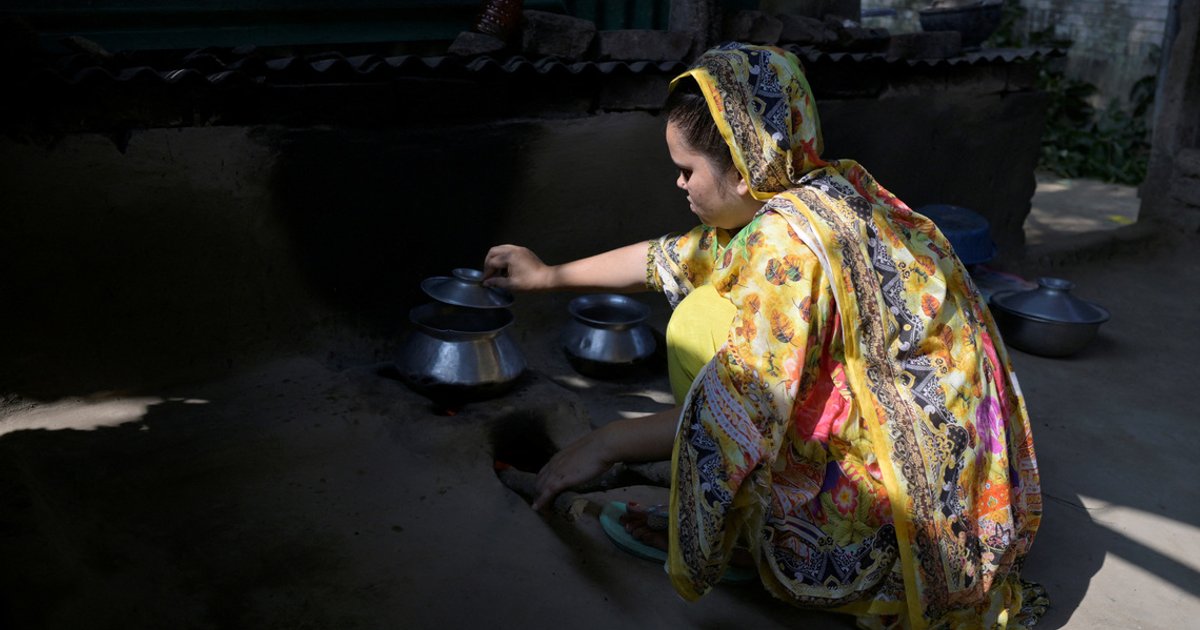
GAZIPUR, Bangladesh – Before dawn each day, garment worker Shilpi Khatun cooks over a wood-fired clay stove because her family cannot afford gas, before heading to a factory in Gazipur, an industrial hub on the outskirts of Dhaka.

The 27-year-old is the sole breadwinner in a household where her husband is unemployed and her parents and in-laws depend on her wages.

Rising prices have left Khatun struggling to afford basic necessities despite five years in the garment industry, a frustration shared by thousands of Bangladesh’s garment workers who staged protests last week demanding the minimum monthly wage be raised to 30,000 taka (S$305) from 12,500 taka.

“Everything costs more now. Rent has doubled, food is more expensive and whatever I earn disappears before the month is over,” Khatun said as she gathered leafy greens outside her home to eat with rice for lunch.

Last week’s unrest, some of it violent, forced hundreds of factories to shut down as workers staged protests and clashed with police, who used tear gas and sound grenades to disperse demonstrators.

The government’s wage board agreed on Nov 4 to implement a revised wage structure from December, with workers set to receive their first pay under the new scale in January, but has yet to determine the size of the increase.


In brief

GAZIPUR, Bangladesh – Before dawn each day, garment worker Shilpi Khatun cooks over a wood-fired clay stove because her family cannot afford gas, before heading to a factory in Gazipur, an industrial hub on the outskirts of Dhaka. Rising prices have left Khatun struggling to afford basic necessities despite five years in the garment industry, a frustration shared by thousands of Bangladesh’s garment workers who staged protests last week demanding the minimum monthly wage be raised to 30,000 taka (S$305) from 12,500 taka.

This is the opening of the story, shared with credit to The Straits Times — Asia. The rest of the report — with every detail — continues on the publisher’s website.

Continue reading at The Straits Times — Asia ↗

Cookie settings

Choose which cookies we may use. You can change this at any time from Cookie settings in the footer. Details of each cookie are in the Cookie Policy.

Strictly necessary

Needed for sign-in, security, payments and remembering these choices. Always on.

Preferences

Remember settings such as dark mode.

Analytics & performance

Help us count visits, understand which pages, devices and countries our readers use, and measure how well the site performs – anonymous and aggregated.

Advertising & marketing

Lets advertising partners show and personalise adverts, measure impressions, clicks and visits, prevent ad fraud and pay us – this is how the free site is funded.

🔔 News notifications

Get headlines from NewsHub on this device — even when the site is closed.

You can switch this off at any time. Works on Android, Windows, Mac and Linux browsers; on iPhone/iPad add the site to your Home Screen first.