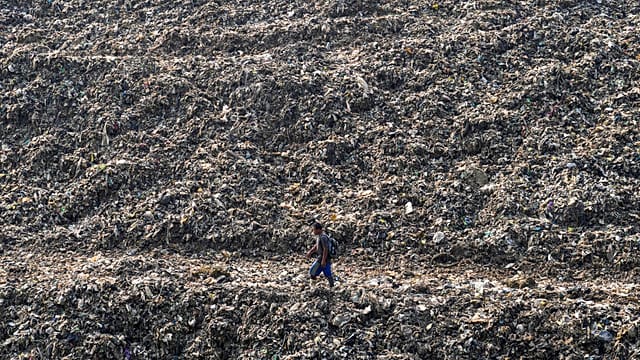
An acrid haze hung over a sprawling dump in Ghana's capital, Accra, as excavators gouged into mounds of smouldering rubbish.
Thin plumes of black smoke curled from burning plastic and rubber, mingling with the rank odour of stagnant lagoon water.
At Agbogbloshie, a district on the Korle Lagoon delta, thousands of tonnes of refuse have accumulated over decades, overwhelming the fragile wetlands overlooking a slum of around 80,000 residents, many of them migrants and traders.
For scrap dealer James Hassan, a 31-year-old Liberian immigrant, it is both his home and livelihood.
Without gloves or a mask, he sifts daily through piles of unwanted electronics and metal for scraps to sell.
The skin on his palms is thickened and scarred from cuts and rashes but he has become accustomed to the pain and discomfort.
"I have headaches and coughs after long days under the sun, but I have never sought medical care. I feel they are normal," he told AFP.
Environmental health experts say that workers are exposed to toxic metals and chemicals through skin cuts, inhaling waste smoke and dust.
While no study as yet links specific diseases to Agbogbloshie's pollution, "the cumulative contamination raises concern even if precise causal chains remain unquantified," epidemiologist Reginald Quansah, of the University of Ghana, said.