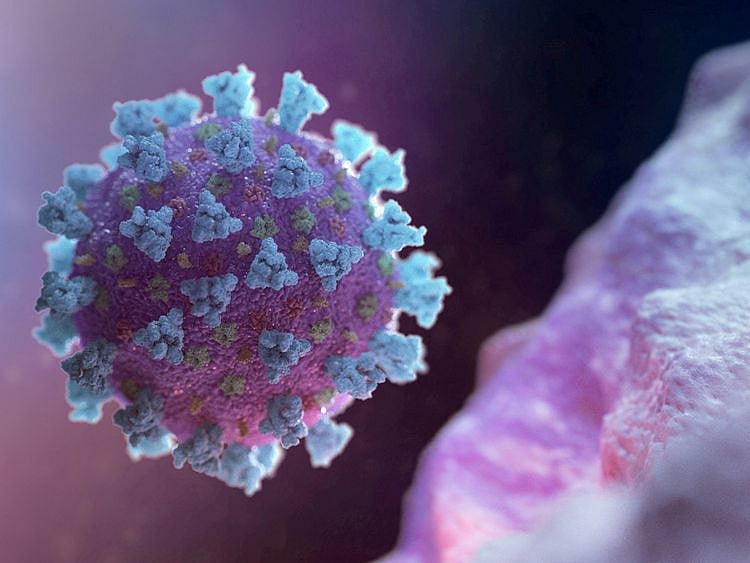
A new COVID-19 variant called PJ.2.1 has been identified. The variant, which was first detected in Canada in May 2026, has been reported to be spreading across continents. The World Health Organization (WHO) says it is closely monitoring the variant because of its growing geographical spread. Its arrival has raised familiar questions about how dangerous it is and whether another wave is coming.
What it is
A study published in the Journal of Infection in October 2026 describes PJ.2.1 as a “novel saltation variant”. It evolved from an older variant that circulated until May 2025 and descends from the JN.1 lineage.
According to Dr Amit Saraf, director of internal medicine at Jupiter Hospital in Thane, PJ.2.1 has a heavily mutated spike protein and an increased ability to interact with the ACE2 receptor, the doorway the virus uses to enter human cells.
“Laboratory experiments also indicated greater cell-entry efficiency in certain cell lines,” he told The Indian Express. “Interestingly, the study did not find that PJ.2.1 was substantially better at escaping antibodies generated by the variant-adapted vaccine responses examined. This is an important distinction: a variant spreading faster does not necessarily mean it causes more severe disease.”
When and where it was first reported
The first confirmed sample was collected on May 2, 2026, in Ontario, Canada.