
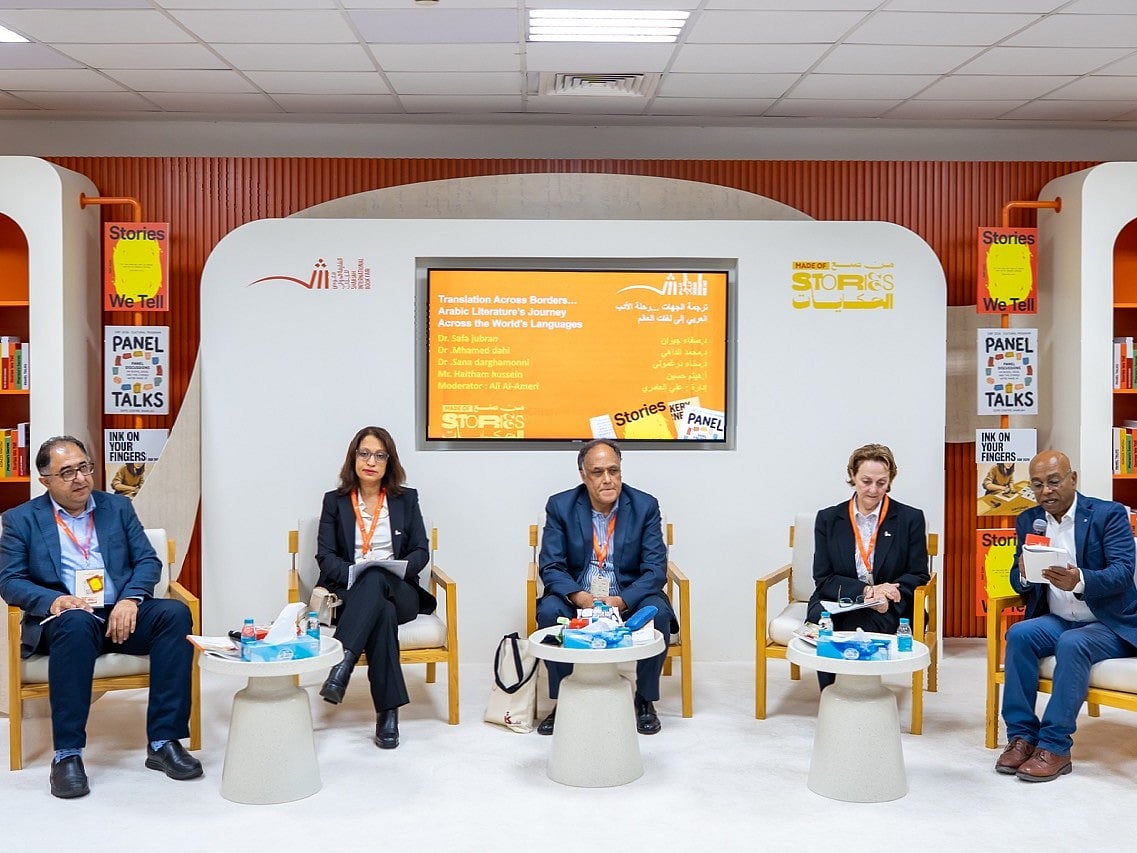
Translating Arabic literature is only the first step towards reaching international readers, scholars and translators said at the 45th Sharjah International Book Fair (SIBF 2026), pointing to cultural context, publishing priorities and promotion as decisive factors.
The session, organised by Kitab Magazine and moderated by Ali Al-Ameri, featured Dr Safa Jubran, Dr Mhamed Dahi, Dr Sana Darghmouni and Haitham Hussein. They discussed the opportunities and obstacles facing Arabic writing in other languages.
Get updated faster and for FREE: Download the Gulf News app now - simply click here.
Why literary translation goes beyond words
Dr Jubran, a Lebanese-Brazilian academic who translates between Arabic and Portuguese, said direct equivalents often fail to carry the cultural and political meanings of the original. A translator, she said, must focus on “conveying the soul of the expression”.
How Arabic literature first reached foreign readers
Moroccan literary critic Dr Dahi traced how Arabic literature first reached foreign audiences, citing French translations of Naguib Mahfouz’s works. He credited Arab intellectuals and diaspora members educated in the West, as well as Orientalist translators, with introducing Arabic works abroad.
Translation and the Arab world’s global image
Dr Darghmouni, a Moroccan professor of comparative literature who has translated Mahmoud Darwish’s poetry into Italian, said translation has helped challenge portrayals of Arab societies as exotic or fundamentally different from European…
