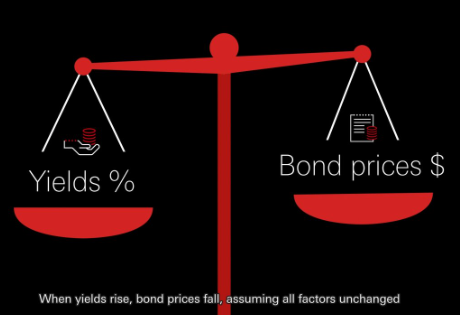
Bonds are an important component of fixed-income investment portfolios, providing investors with an opportunity to earn periodic interest income while preserving capital, subject to the issuer’s ability to meet its obligations. However, one of the fundamental concepts in bond investing is the inverse relationship between bond prices and yields. Unlike many financial assets, where higher returns may be associated with higher market values, bonds generally experience declining prices when their yields increase and rising prices when their yields decrease. Understanding this relationship is essential for evaluating bond investments, assessing market movements and making informed investment decisions.
A bond represents a debt instrument through which governments or corporations raise funds from investors for an agreed period. In return, the issuer commits to making periodic interest payments, known as coupons, and repaying the principal amount, also referred to as the face value, upon maturity. The coupon rate is usually determined at issuance and remains fixed throughout the bond’s life for conventional fixed-rate securities. However, the market price of an existing bond can fluctuate depending on prevailing interest rates, inflation expectations, credit conditions and investor demand. These changes influence the bond’s yield, which measures the return an investor expects to earn based on the purchase price, coupon payments and remaining time to maturity.