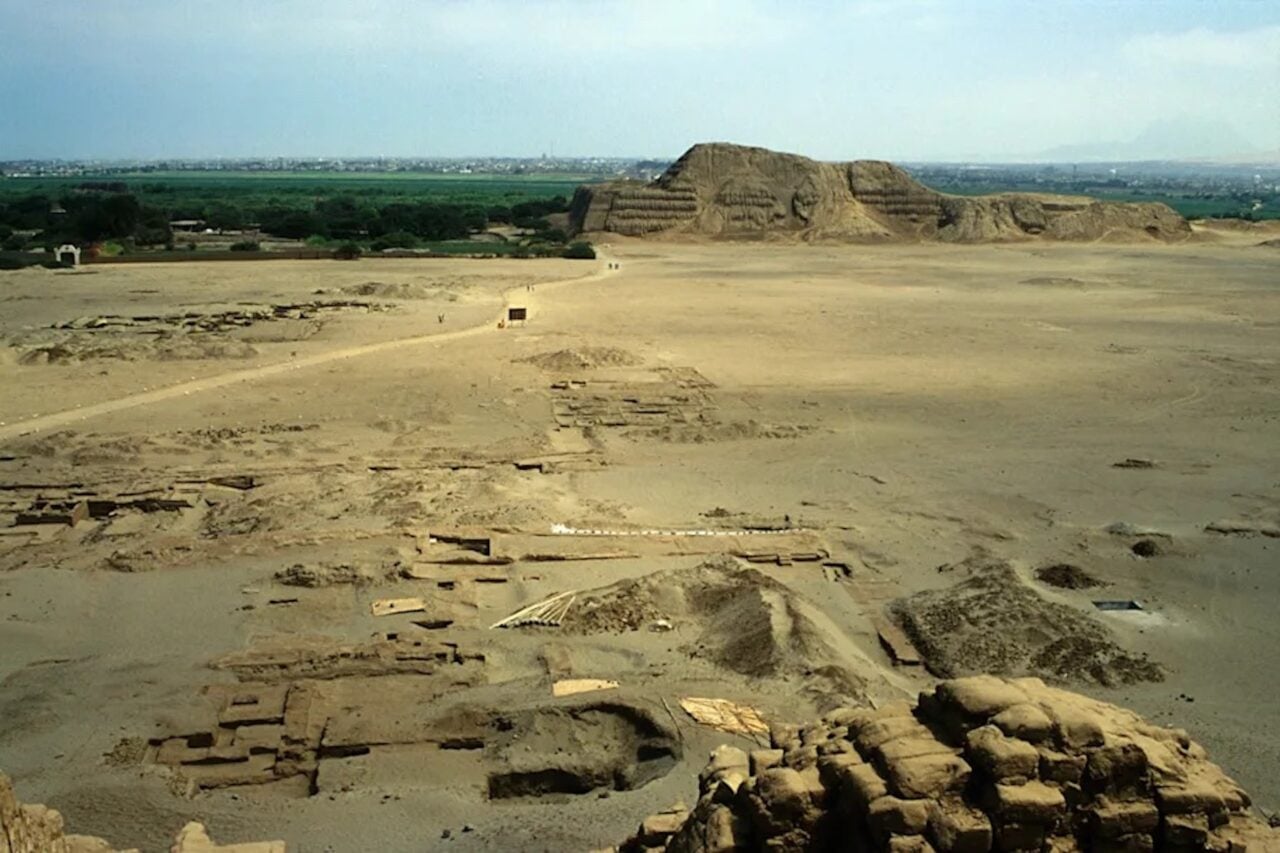
Did El Niño Make Ancient Peru More Violent? 1,633 Skeletons Offer Clues

Did El Niño Make Ancient Peru More Violent? 1,633 Skeletons Offer Clues

Despite evidence of ritual human sacrifices, researchers found that violence was rare in Peru's Lambayeque Valley.

The ancient societies that once inhabited Peru’s desert coast faced a formidable enemy: the weather. Periodic El Niño events brought torrential rains and catastrophic flooding to the otherwise arid landscape, wreaking havoc on communities in the Lambayeque Valley. Some prehistoric cultures responded with large-scale human sacrifices, perhaps in an attempt to appease the gods. A new study suggests these rituals did not reflect a broader culture of violence despite centuries of environmental upheaval.

In ancient northern Peru, ritual killings have been linked to catastrophic flooding brought on by El Niño. This has raised the question of whether climate stress also fueled violence in everyday life as communities competed for scarce resources.

In an effort to understand how societies might respond to climate change, a team of researchers surveyed evidence for violent trauma over thousands of years in Peru’s Lambayeque Valley. The results revealed that everyday violence among these societies was remarkably rare even during times of ecological upheaval.

The findings, published in Frontiers in Environmental Archaeology, suggest that climate stress does not inevitably lead to increased violence in human societies.

The Lambayeque Valley was typically arid, but its communities depended on rivers and a productive marine ecosystem for food and livelihoods.


In brief

The ancient societies that once inhabited Peru’s desert coast faced a formidable enemy: the weather. Periodic El Niño events brought torrential rains and catastrophic flooding to the otherwise arid landscape, wreaking havoc on communities in the Lambayeque Valley. In ancient northern Peru, ritual killings have been linked to catastrophic flooding brought on by El Niño.

This is the opening of the story, shared with credit to Gizmodo. The rest of the report — with every detail — continues on the publisher’s website.

Continue reading at Gizmodo ↗

Cookie settings

Choose which cookies we may use. You can change this at any time from Cookie settings in the footer. Details of each cookie are in the Cookie Policy.

Strictly necessary

Needed for sign-in, security, payments and remembering these choices. Always on.

Preferences

Remember settings such as dark mode.

Analytics & performance

Help us count visits, understand which pages, devices and countries our readers use, and measure how well the site performs – anonymous and aggregated.

Advertising & marketing

Lets advertising partners show and personalise adverts, measure impressions, clicks and visits, prevent ad fraud and pay us – this is how the free site is funded.

🔔 News notifications

Get headlines from NewsHub on this device — even when the site is closed.

You can switch this off at any time. Works on Android, Windows, Mac and Linux browsers; on iPhone/iPad add the site to your Home Screen first.