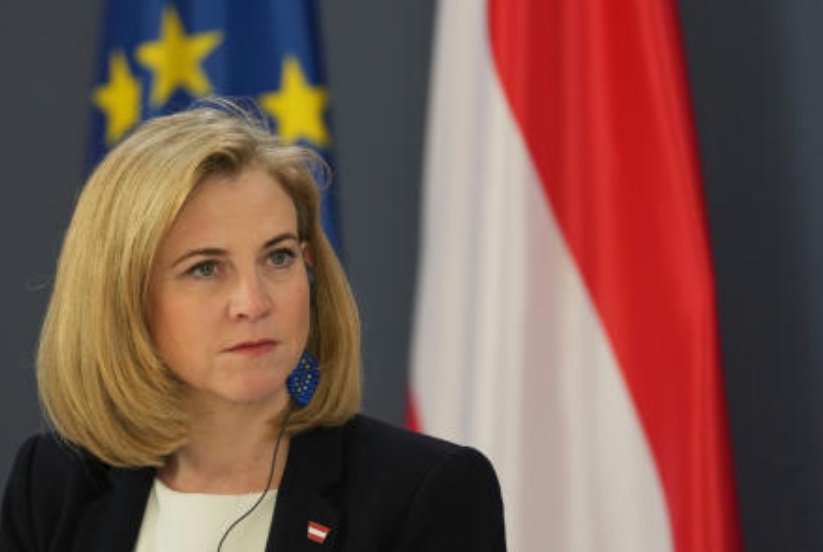
Austria advances law change to crack down on espionage

Austria advances law change to crack down on espionage

Austria is planning to enhance its espionage laws with tougher penalties for spying offenses, including jail sentences up to 10 years. This move comes in response to rising hybrid threats.

VIENNA: Austria is planning to widen the scope of its espionage law and introduce tougher sentencing for offenses in response to an increase in so-called hybrid threats, ministers said Wednesday.

A draft bill to be submitted to parliament includes jail sentences of up to 10 years for spying to the detriment of Austria, Foreign Minister Beate Meinl-Reisinger and Interior Minister Gerhard Karner told journalists.

The bill also includes sentences of up to five years for espionage targeting the EU or international organizations, as well as new penalties for the recruitment of agents, they said.

“In the future it will not only be about espionage to the detriment of Austria, but also to the detriment of international organizations or the EU,” Meinl-Reisinger said.

Karner said Europe was increasingly being targeted with “acts of sabotage, with disinformation, with attempts to influence elections.”

“Austria is not yet so much in the focus, but we must prepare. We must prepare for situations that we are not accustomed to,” he said.

Austria’s state security secretary Joerg Leichtfried said the measures would also crack down on the use of “disposable agents... people who are recruited for a one-off task that perhaps looks completely harmless.”

“Recruiting people to get them to do things without knowing why and for whom they are doing them...

In brief

VIENNA: Austria is planning to widen the scope of its espionage law and introduce tougher sentencing for offenses in response to an increase in so-called hybrid threats, ministers said Wednesday. A draft bill to be submitted to parliament includes jail sentences of up to 10 years for spying to the detriment of Austria, Foreign Minister Beate Meinl-Reisinger and Interior Minister Gerhard Karner told journalists.

This is the opening of the story, shared with credit to Arab News. The rest of the report — with every detail — continues on the publisher’s website.

Continue reading at Arab News ↗

Cookie settings

Choose which cookies we may use. You can change this at any time from Cookie settings in the footer. Details of each cookie are in the Cookie Policy.

Strictly necessary

Needed for sign-in, security, payments and remembering these choices. Always on.

Preferences

Remember settings such as dark mode.

Analytics & performance

Help us count visits, understand which pages, devices and countries our readers use, and measure how well the site performs – anonymous and aggregated.

Advertising & marketing

Lets advertising partners show and personalise adverts, measure impressions, clicks and visits, prevent ad fraud and pay us – this is how the free site is funded.

🔔 News notifications

Get headlines from NewsHub on this device — even when the site is closed.

You can switch this off at any time. Works on Android, Windows, Mac and Linux browsers; on iPhone/iPad add the site to your Home Screen first.