The brain is an intricate organ, one that we still barely understand. And sometimes, as a recent case study shows, we can change the brain in ways that no one would have expected.
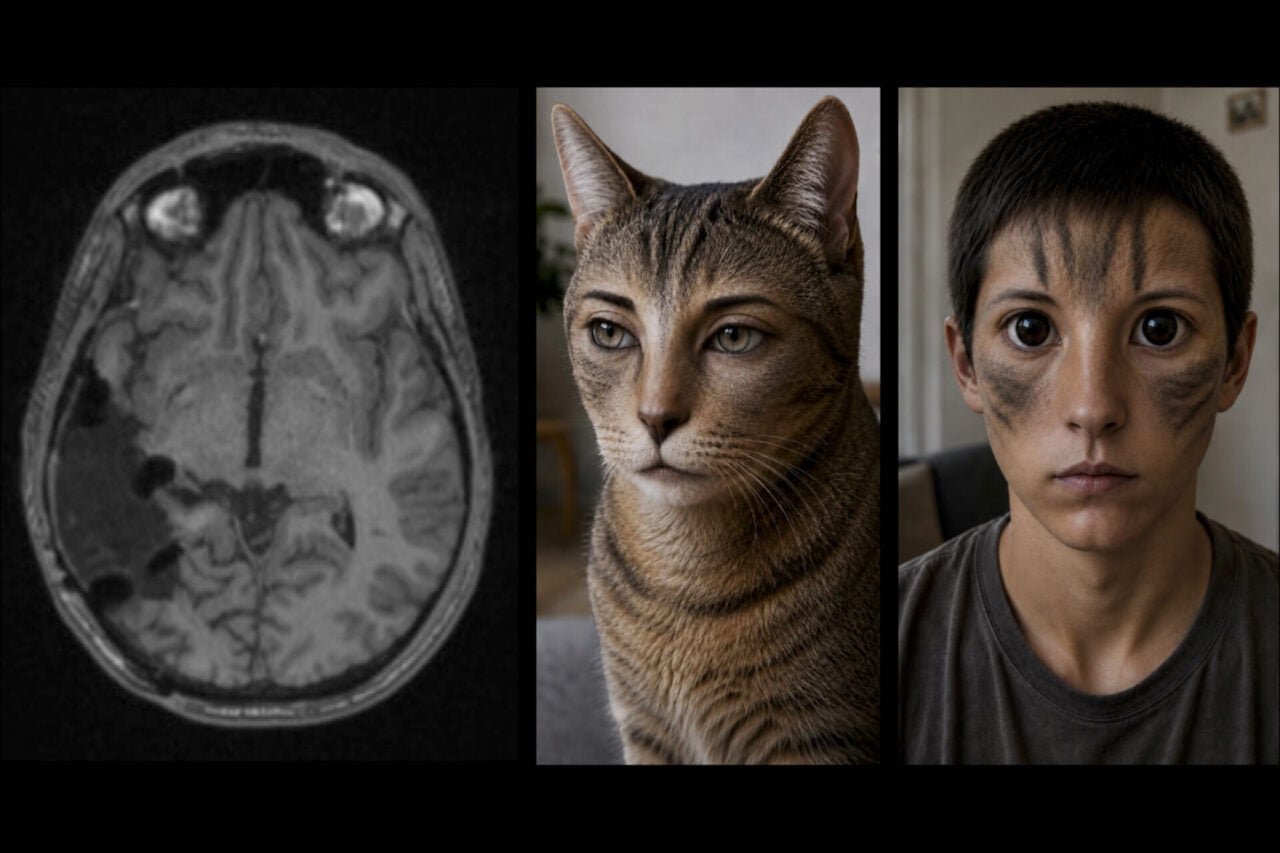
Researchers at Dartmouth College and Brigham and Women’s Hospital have detailed a 28-year-old man with a peculiar condition that causes him to see his cat’s eyes on people and the other way around. The man, identified only as Karl, developed the condition after he underwent brain surgery. Though these sorts of cases are incredibly rare, they illustrate the unique neural circuitry that underlies our facial perception, the researchers said.
“Seeing a friend’s eyes in your cat’s face, or vice versa, is extraordinary, but it tells us something about how all of us process faces,” lead author Brad Duchaine, a professor and chair of psychological and brain sciences at Dartmouth, told Gizmodo.
Duchaine is head of the Social Perception Lab at Dartmouth. He and his team have a particular focus on people with prosopometamorphopsia, a group of conditions that causes people to experience distortions in their facial processing.
Prosopometamorphopsia, or PMO for short (phew, thank goodness for the acronym), is rare in general, with only about 75 cases ever recorded in the medical literature.