
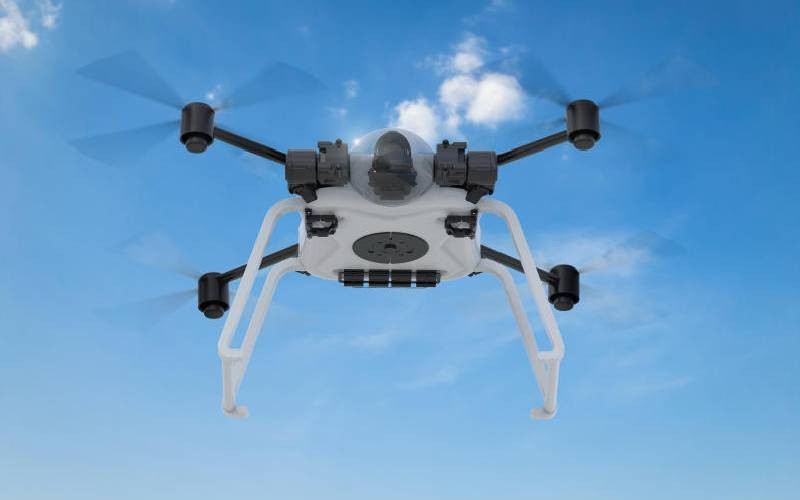
In 2008, the US Army’s Asymmetric Warfare Group was preparing American soldiers for an emerging battlefield threat: The possibility that small, commercially available drones could be modified and used as weapons. During a training exercise called “In the Wind,” a team playing the role of an enemy modified commercial drones to deliver dummy munitions in simulated surprise attacks against American troops. The soldiers confronting this unfamiliar threat were initially caught off guard.
At the time, the exercise could have looked like preparation for a problem that did not yet exist. Years later, ISIS was adapting commercial drones for surveillance and attack in Iraq and Syria. What interests me is not that somebody predicted the future correctly. It is that they did not wait for the future to prove them right before preparing.
The purpose of thinking about the future is not to predict it perfectly. It is to avoid being completely surprised by it.
For much of modern warfare, aerial capability required aircraft, pilots, airfields and maintenance systems. For all practical purposes, the sky belonged to the state. Small drones have changed part of that equation. States remain enormously stronger, but armed groups can now acquire limited aerial capabilities without operating conventional aircraft.
Somalia, already fighting Al-Shabaab and Islamic State in Somalia (ISIS-Somalia), cannot regard these developments as distant.
