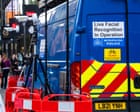
Inspectors find some officers acted on potential matches from retrospective searches without making enough checks
Police officers risk arresting innocent people, especially from ethnic minorities, if they treat inaccurate facial recognition data as evidence, an official report has found.
Although the technology can help fight crime, the report found it is beset by errors and biases, and operators do not always realise they must make further inquiries to verify the data.
The report by His Majesty’s Inspectorate of Constabulary, published on Wednesday, covers only retrospective facial recognition. The technology is seen as less controversial and less tricky to get right than live facial recognition, which is used in real time to find suspects.
“Some investigators didn’t know that RFR results were intelligence rather than evidence and required further enquiries before officers took enforcement action,” the report said.
“This creates a risk that people could be incorrectly identified or arrested, which could undermine public confidence in the technology.
“We found that some investigators didn’t always carry out enough corroborative enquiries before acting on potential matches. In a small number of cases, officers relied too heavily on RFR results, which led to inappropriate investigative action.”
The report said there are still issues with bias in the algorithm, including being more likely to wrongly flag people from ethnic minorities as suspects.