
Nesting turtles, fish-filled coral reefs, and mysterious deep-sea creatures: this is what scientists found in one of the world’s last largely untouched ecosystems.Two remote coral atolls in the Pacific Ocean are being studied to support local and global conservation efforts.Bikar and Bokak became the Marshall Islands’ first national marine sanctuaries in 2025. Since then, scientists have been working to establish a comprehensive ecological baseline for the 48,000-square-kilometre site, from sky to land and sea.Their findings matter far beyond the remote atolls, which lie around 116 and 385 kilometres from the nearest inhabited atoll, respectively.“They are among the best ecological reference systems we have to better understand what we have lost elsewhere and to provide fundamental insights needed for effective conservation and restoration efforts,” says marine ecologist Dr Alan Friedlander of the University of Hawai’i. He served as chief scientist aboard a joint expedition in Bikar and Bokak with Pristine Seas, a global conservation and exploration project founded by National Geographic Explorer Enric Sala to help protect vital ocean areas.What they found were “some of the most intact ecosystems remaining in the region” – and perhaps the world.‘Treasures for the entire planet’: What the world can learn from remote ecosystemsExtensive monitoring of Bikar and Bokak in 2023 informed the creation of the protected area.
‘Treasures for the entire planet’: Scientists map life in one of the world’s last wild ecosystems
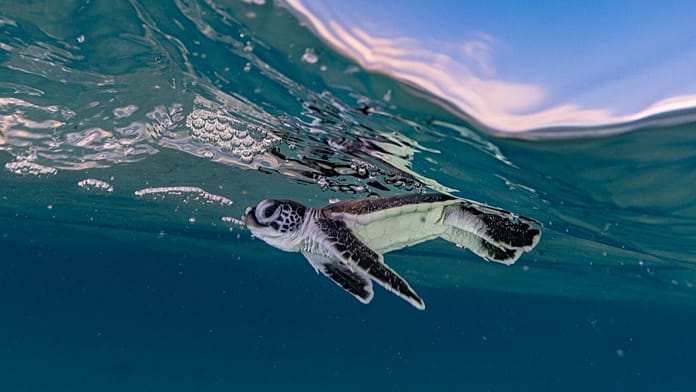
Scientists are mapping one of the world’s last wild ecosystems to help us ‘understand what we have lost elsewhere’.
In brief
Nesting turtles, fish-filled coral reefs, and mysterious deep-sea creatures: this is what scientists found in one of the world’s last largely untouched ecosystems.Two remote coral atolls in the Pacific Ocean are being studied to support local and global conservation efforts.Bikar and Bokak became the Marshall Islands’ first national marine sanctuaries in 2025. Since then, scientists have been working to establish a comprehensive ecological baseline for the 48,000-square-kilometre site, from sky to land and sea.Their findings matter far beyond the remote atolls, which lie around 116 and 385 kilometres from the nearest inhabited atoll, respectively.“They are among the best ecological refere…
This is the opening of the story, shared with credit to Euronews. The rest of the report — with every detail — continues on the publisher’s website.
Continue reading at Euronews ↗