
Hundreds of thousands of people took to the streets across Spain on Wednesday in the country’s first general strike in 14 years, called in protest at the housing crisis and low wages. Even heavy rain did not stop the demonstrations. In the capital, Madrid, protesters braved the weather with chants, dancing and keys held aloft.The 24-hour stoppage began at midnight under the slogan "Wages, housing and prices". It was backed by Spain’s two largest trade unions, Comisiones Obreras (CCOO) and the General Union of Workers (UGT), along with the smaller CGT and CNT unions and other organisations. It was the first major mobilisation by the main unions since 2012, under the conservative prime minister Mariano Rajoy, and the eighth general strike since Spain returned to democracy in the late 1970s.Estimates of turnout varied widely between organisers and the authorities. In Madrid, the Tenants’ Union (Sindicato de Inquilinas) put attendance at more than half a million people, while the central government’s office in the city counted 120,000. In Barcelona, organisers said 400,000 people took part, compared with 55,000 according to the city police. In the northern city of Bilbao, municipal police recorded around 50,000 people.Young people are among the hardest hit by a housing crisis that has pushed rents up by around 80% over the past decade, while wages have failed…
Spain grinds to a halt in first general strike in 14 years
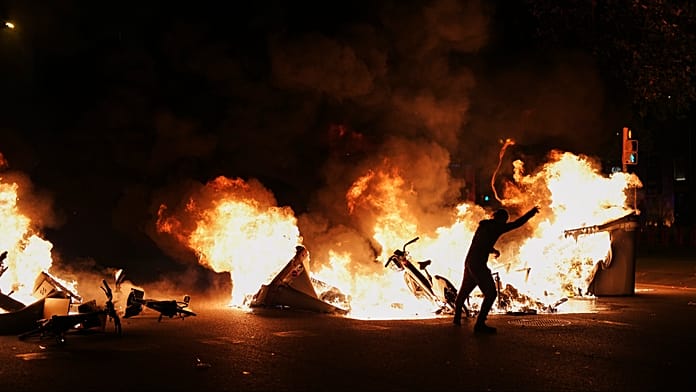
Riot police clashed with masked protesters in Madrid and Barcelona, leaving more than 70 people arrested, as unions and employers gave opposing verdicts on the walkout.
In brief
Hundreds of thousands of people took to the streets across Spain on Wednesday in the country’s first general strike in 14 years, called in protest at the housing crisis and low wages. It was the first major mobilisation by the main unions since 2012, under the conservative prime minister Mariano Rajoy, and the eighth general strike since Spain returned to democracy in the late 1970s.Estimates of turnout varied widely between organisers and the authorities.
This is the opening of the story, shared with credit to Euronews. The rest of the report — with every detail — continues on the publisher’s website.
Continue reading at Euronews ↗