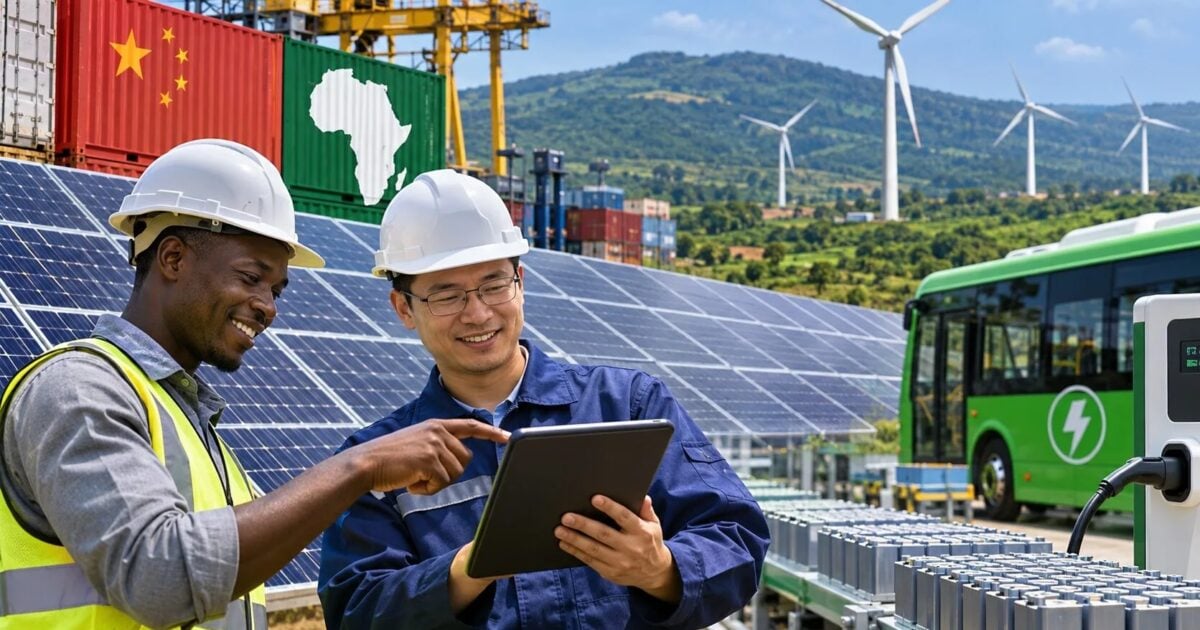
China’s green industrial transition offers Africa a new economic opportunity

China’s green industrial transition offers Africa a new economic opportunity

China's experience in green manufacturing, renewable energy and technological innovation offers valuable opportunities for cooperation.

China’s transition towards a greener industrial economy is creating a new chapter in its economic development, with implications that extend well beyond its borders. What is unfolding is not simply an environmental undertaking, but a far-reaching economic and technological transformation that is generating new industries, expanding markets, accelerating innovation and creating opportunities for international cooperation.

For Africa, China’s green industrial transition presents an important opportunity to strengthen economic ties, attract investment and participate more actively in the emerging global green economy. As demand grows for clean energy, electric mobility, energy storage and low-carbon manufacturing, the continent has an opportunity to build on its natural resources and develop new industrial capabilities.

China’s latest industrial green-development plan provides a clear indication of the scale and direction of this transformation. Covering the 2026–2030 period, the plan seeks to make manufacturing more energy-efficient, reduce industrial carbon emissions and enhance the competitiveness of green industries.

Its targets include reducing energy consumption per unit of industrial value added by more than 10 per cent and establishing 500 zero-carbon factories. It also seeks to expand renewable energy use in industrial production, accelerate the development of electric vehicles, energy storage and new-energy equipment, and promote industrial recycling and low-carbon hydrogen. China is also targeting a peak in industrial carbon dioxide emissions by 2030.

In brief

China’s transition towards a greener industrial economy is creating a new chapter in its economic development, with implications that extend well beyond its borders. It also seeks to expand renewable energy use in industrial production, accelerate the development of electric vehicles, energy storage and new-energy equipment, and promote industrial recycling and low-carbon hydrogen. China is also targeting a peak in industrial carbon dioxide emissions by 2030.

This is the opening of the story, shared with credit to Capital FM Kenya. The rest of the report — with every detail — continues on the publisher’s website.

Continue reading at Capital FM Kenya ↗

Cookie settings

Choose which cookies we may use. You can change this at any time from Cookie settings in the footer. Details of each cookie are in the Cookie Policy.

Strictly necessary

Needed for sign-in, security, payments and remembering these choices. Always on.

Preferences

Remember settings such as dark mode.

Analytics & performance

Help us count visits, understand which pages, devices and countries our readers use, and measure how well the site performs – anonymous and aggregated.

Advertising & marketing

Lets advertising partners show and personalise adverts, measure impressions, clicks and visits, prevent ad fraud and pay us – this is how the free site is funded.

🔔 News notifications

Get headlines from NewsHub on this device — even when the site is closed.

You can switch this off at any time. Works on Android, Windows, Mac and Linux browsers; on iPhone/iPad add the site to your Home Screen first.