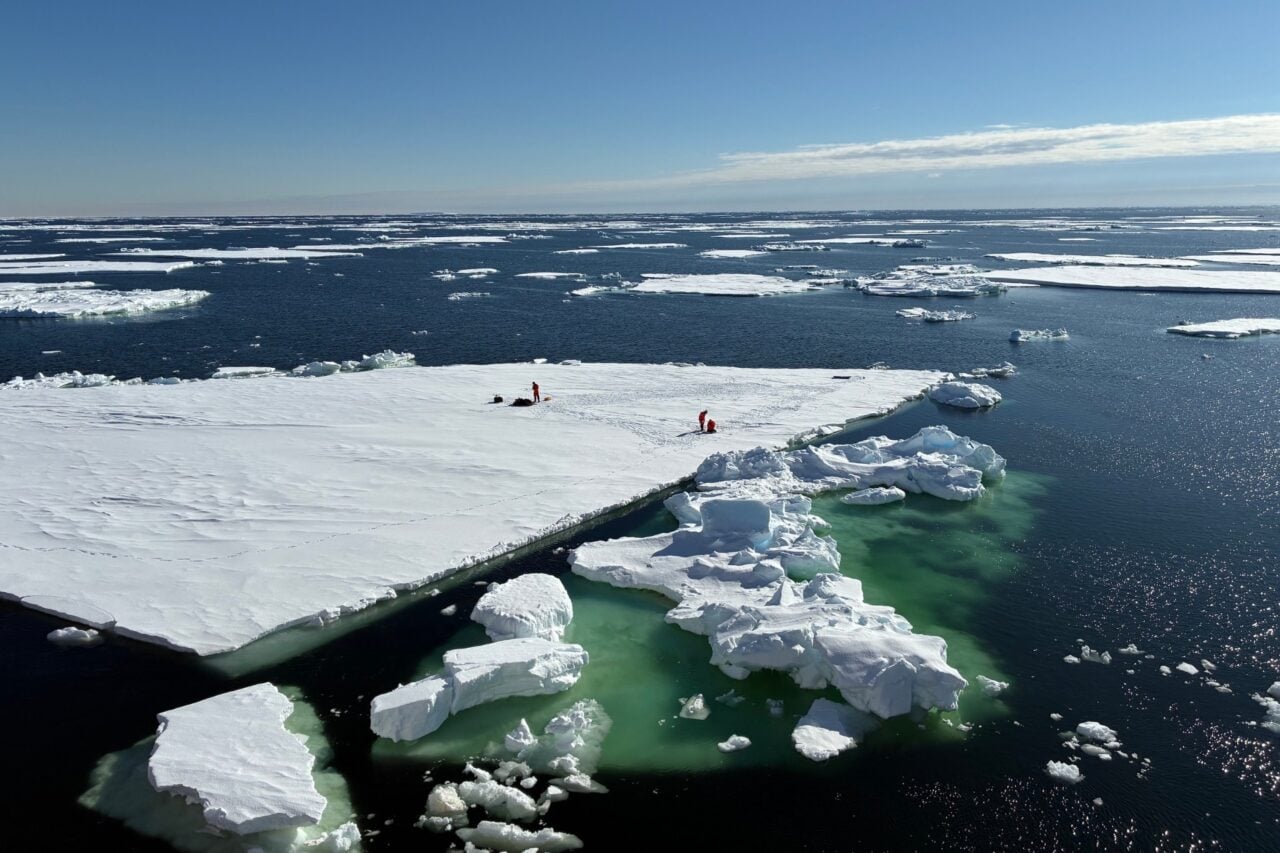
As glaciers collapse, sea ice dwindles, and wildfire rages across permafrost regions, scientists are growing increasingly concerned about the state of Earth’s cryosphere. The planet’s frozen parts play a key role in regulating the climate, but in a warming world, they’re breaking down.
A study published today in the journal Science brings this global crisis into sharp focus. Based on their findings, the authors conclude that the essential functions of the cryosphere are no longer within a “safe operating space,” meaning they are on a trajectory that locks in long-term risks for human societies and ecosystems.
“It’s really time to take action and rapidly cut greenhouse gas emissions,” co-author Lan Wang-Erlandsson, an associate professor and principal researcher at Stockholm University, told Gizmodo.
Researchers use the concept of a safe operating space to define the environmental limits necessary to keep the planet stable and healthy enough for humans and ecosystems to thrive. It’s integral to the Planetary Boundaries framework, which identifies nine processes that are critical for maintaining the stability and resilience of the entire Earth system. Seven of the nine planetary boundaries have already been breached due to humanity’s environmental impact.
The cryosphere is primarily accounted for by the “climate”