
A routine chemistry experiment has led to an unexpected breakthrough, helping scientists isolate a class of molecules that researchers had struggled to capture for more than six decades. Two doctoral students at the University of Würzburg in Germany stumbled upon the discovery while investigating reactions that had nothing to do with their original research goal. Their findings, published in Nature Chemistry on October 27, 2026, offer a new way to produce stable oxoboranes, unusual compounds containing a triple bond between boron and oxygen. According to the University of Würzburg, the discovery came after two researchers independently noticed unusual orange and yellow solids forming in their laboratory reactions. What initially appeared to be an unexpected experimental result turned out to be a significant development in inorganic chemistry.A molecule that had eluded chemists for decadesOxoboranes have been on chemists’ research wish lists since at least the early 1960s. These molecules contain a triple bond between boron and oxygen, an unusual arrangement that has proved exceptionally difficult to stabilise. Boron is known for its tendency to form fewer and more varied bonding arrangements than elements such as carbon. Triple bonds are particularly challenging because of the element’s electron-deficient nature.
Stable Oxoboranes Isolated: Würzburg PhD pair trap rare bond; accident unlocks new chemistry
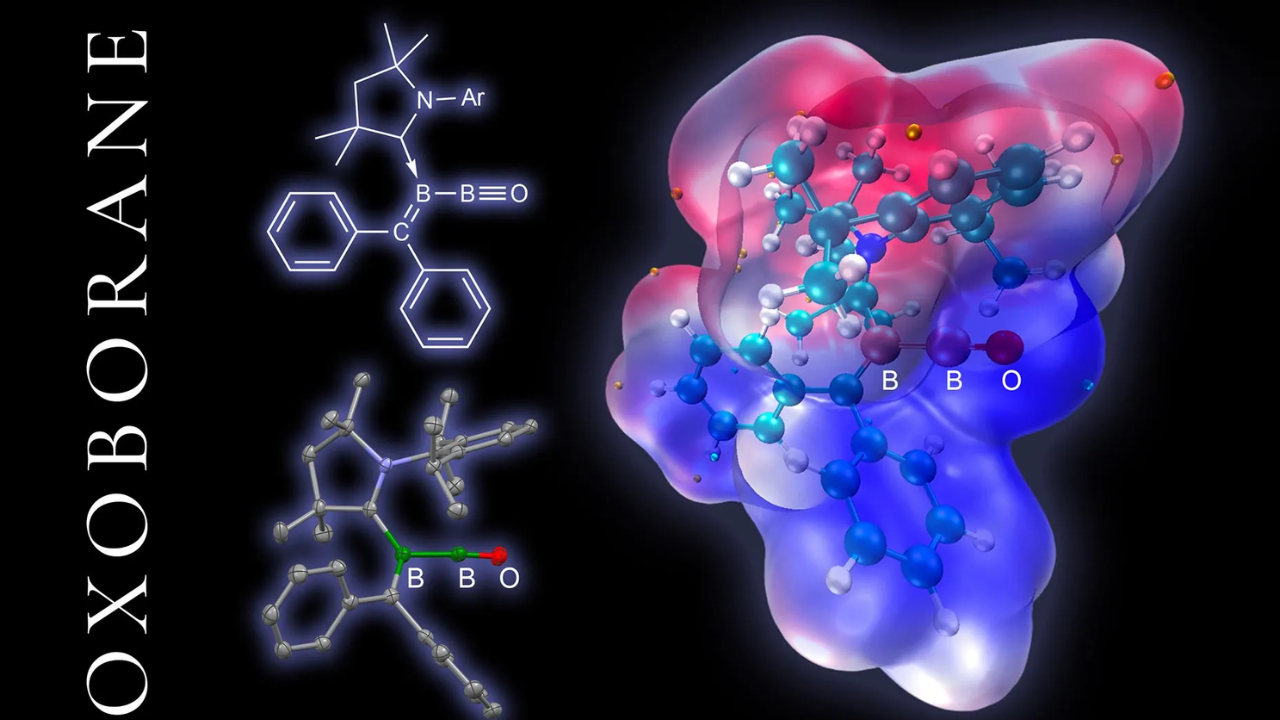
Two doctoral students at the University of Würzburg discovered stable oxoboranes, which contain a triple bond between boron and oxygen. Their findings emerged while studying reactions with diboracumulene and ketones, producing unexpected yellow and orange solids. The three new compounds can be isolated as crystalline solids and remain stable at room temperature. This breakthrough may allow greater exploration of…
In brief
A routine chemistry experiment has led to an unexpected breakthrough, helping scientists isolate a class of molecules that researchers had struggled to capture for more than six decades. Their findings, published in Nature Chemistry on October 27, 2026, offer a new way to produce stable oxoboranes, unusual compounds containing a triple bond between boron and oxygen.
This is the opening of the story, shared with credit to The Times of India — World. The rest of the report — with every detail — continues on the publisher’s website.
Continue reading at The Times of India — World ↗