
In January, under the light of a full moon and one too many streetlights, a critically endangered leatherback turtle named Bella did something both remarkable and worrying: she tried to nest on a sidewalk in Ecuador.Disoriented by nearby streetlights, the enormous female crawled over a rock breakwater and left the beach behind. She failed to lay her eggs there and returned to the ocean, still carrying them. Two nights later, she tried again, this time on a quieter stretch of sand at Playa de Crucita. There, she dug a nest, deposited 47 eggs, covered them carefully, and returned to the sea.A few weeks later, 44 hatchlings emerged and made their way toward the surf. Bella, it turned out, was only beginning. Researchers who had tagged her during her first attempt found that she nested four or five times during the 2026 season. Across all her nests, 146 eggs produced 134 hatchlings, i.e. a 91.8% success rate.For a species whose eastern Pacific population has fallen by more than 90% since the 1980s, that number is a small but powerful sign that leatherbacks may still be able to adapt, if people give them the space and protection to do so.A species on the edgeLeatherback turtles are the largest sea turtles on Earth, capable of reaching up to three metres in length and…
An endangered leatherback turtle tried to nest on an Ecuador sidewalk before finding a quieter beach
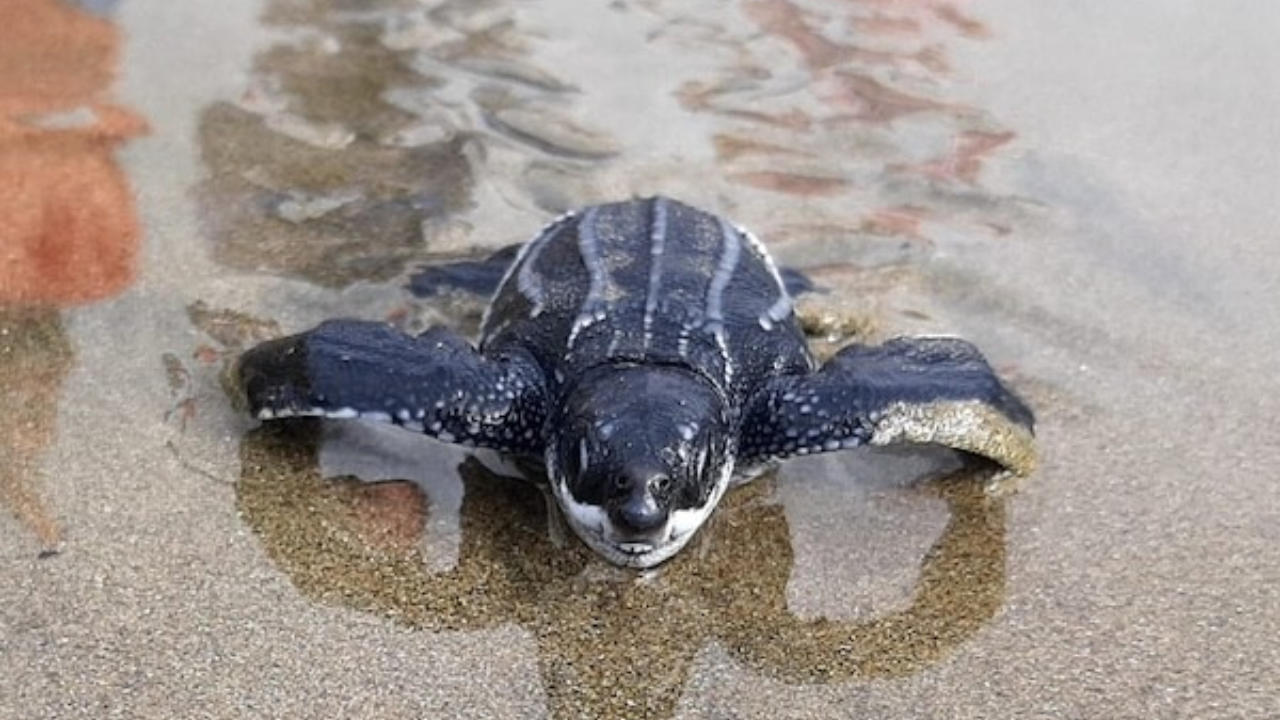
Bella, a resilient leatherback turtle, made a remarkable nesting attempt in Ecuador, overcoming an array of challenges posed by artificial lighting. Her successful hatchling rates reveal a promising trend, indicating that leatherbacks are beginning to adapt to their new coastal environments. Conservation efforts are increasingly vital as these turtles face persistent threats, highlighting the urgent need to…
In brief
In January, under the light of a full moon and one too many streetlights, a critically endangered leatherback turtle named Bella did something both remarkable and worrying: she tried to nest on a sidewalk in Ecuador.Disoriented by nearby streetlights, the enormous female crawled over a rock breakwater and left the beach behind. Two nights later, she tried again, this time on a quieter stretch of sand at Playa de Crucita.
This is the opening of the story, shared with credit to The Times of India — World. The rest of the report — with every detail — continues on the publisher’s website.
Continue reading at The Times of India — World ↗