
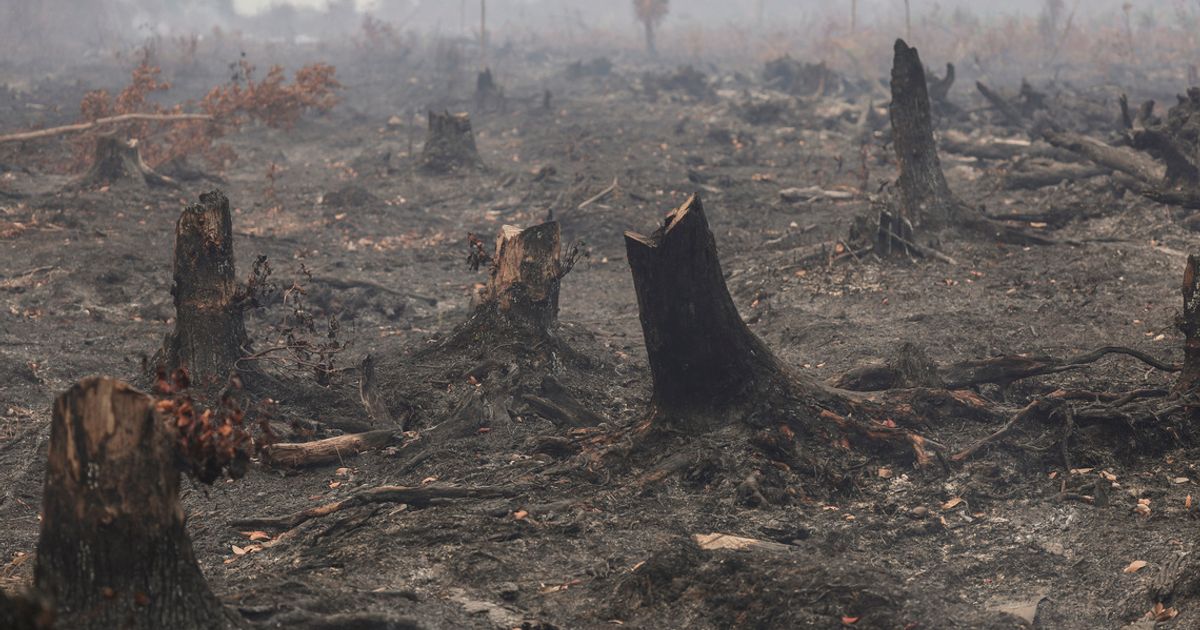
JAKARTA – Thousands of hectares of land on palm oil and pulpwood concessions run by large listed firms were burned during Indonesia’s worst fire season in years, highlighting the role of deforestation and land clearing, a study showed on Nov 13.
Indonesia’s forest fires caused a spike in respiratory illness at home and triggered air pollution warnings and school closures across the region, with fire emissions surging to three times the seasonal average.
A total of 2.88 million hectares of land were damaged by fire from January to October 2026, driven by intense El Nino weather conditions and extreme heat, as well as clearing of forests to make way for industrial-scale palm oil and pulpwood plantations, according to a joint study by Rainforest Action Network (RAN) and geomonitoring platform Nusantara Atlas.
The amount of fire-damaged land in the first three quarters of this year was 35% higher than in the same period of 2019, the last year Indonesia faced strong “super-El Nino” conditions, Nusantara Atlas said.
While the analysis did not establish how the fires were ignited, it highlighted the risks associated with degraded peatlands and inadequate fire management regimes in rapidly expanding agricultural concessions, along with the role played by banks in financing deforestation.
“It’s not really a question of who lit the match, but who drained the peat…
