📰 Newspapers

Experts Thought This Giant Bronze Boot From a Scottish Bog Was Loot. Here’s the Real Story

Experts Thought This Giant Bronze Boot From a Scottish Bog Was Loot. Here’s the Real Story

A new analysis is forcing a rethink of the gilded Roman relic, found more than 200 years ago.

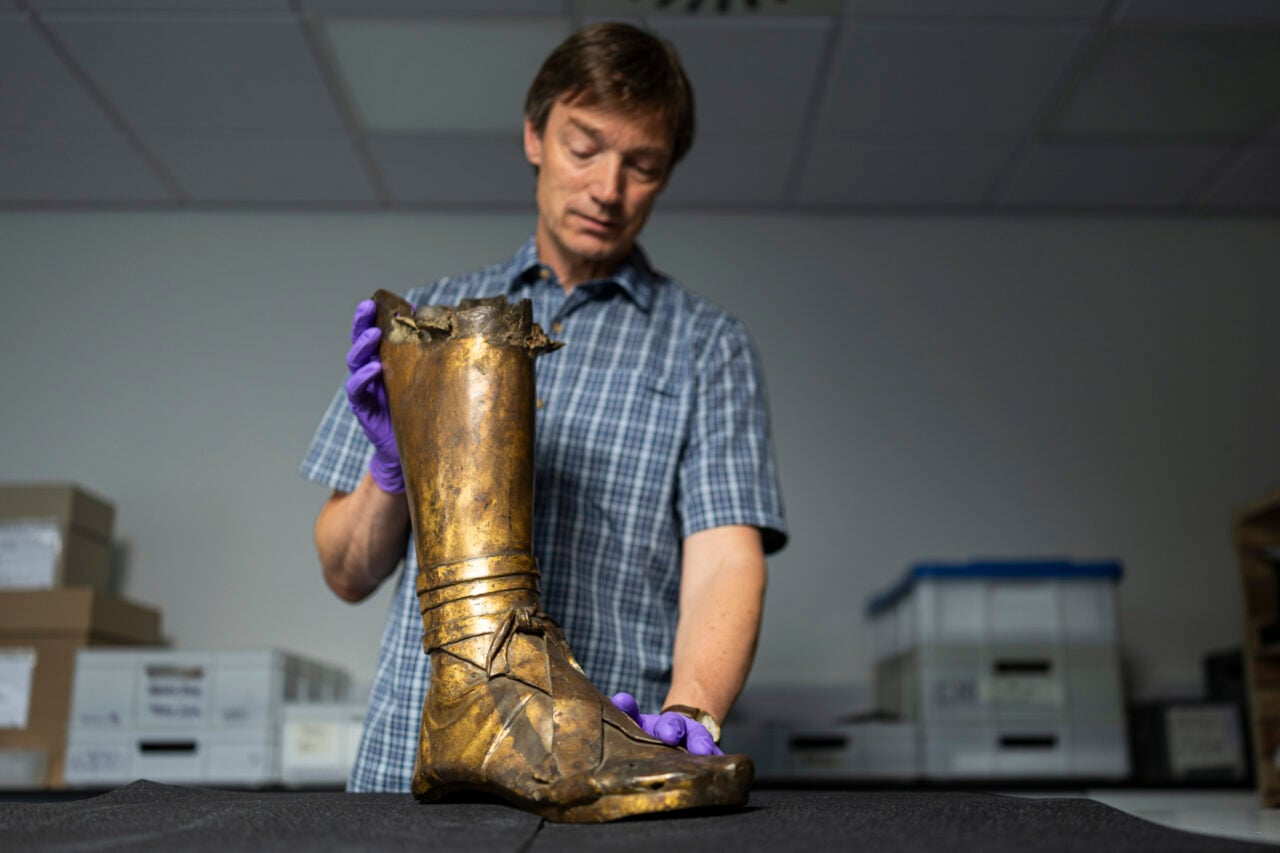
In 1820, a larger-than-life bronze boot was pulled from a Scottish bog. For centuries, experts assumed it was looted from a Roman settlement, perhaps as an odd spoil of war. But a new analysis challenges that theory, suggesting that Rome’s own soldiers deliberately dismantled the statue.

In a recent statement, National Museums Scotland announced that its team had reconstructed the full statue that once included the boot known as the Milsington Leg. During a closer analysis of the boot and other statue fragments from the Roman frontier, the researchers realized the leg appeared to have been carefully removed, not “brutally hacked off,” the museum explained. Taking into account known records of Rome’s conquest of Scotland, the team now believes the statue depicted Antoninus Pius on horseback, and the leg was removed by the Romans as they retreated from southern Scotland in the CE 160s or 180s.

“This really turns on its head our understanding of Rome’s second attempt at conquering Scotland,” Fraser Hunter, the museum’s principal curator of prehistoric and Roman archaeology, said in the statement. “But it begs the question … where is the rest of the statue?”

Antoninus Pius was the successor to Hadrian, who commissioned the famous eponymous wall symbolic of the Roman Empire’s conquest of what is now the United Kingdom.

In brief

In 1820, a larger-than-life bronze boot was pulled from a Scottish bog. In a recent statement, National Museums Scotland announced that its team had reconstructed the full statue that once included the boot known as the Milsington Leg. During a closer analysis of the boot and other statue fragments from the Roman frontier, the researchers realized the leg appeared to have been carefully removed, not “brutally hacked off,” the museum explained.

This is the opening of the story, shared with credit to Gizmodo. The rest of the report — with every detail — continues on the publisher’s website.

Continue reading at Gizmodo ↗

Cookie settings

Choose which cookies we may use. You can change this at any time from Cookie settings in the footer. Details of each cookie are in the Cookie Policy.

Strictly necessary

Needed for sign-in, security, payments and remembering these choices. Always on.

Preferences

Remember settings such as dark mode.

Analytics & performance

Help us count visits, understand which pages, devices and countries our readers use, and measure how well the site performs – anonymous and aggregated.

Advertising & marketing

Lets advertising partners show and personalise adverts, measure impressions, clicks and visits, prevent ad fraud and pay us – this is how the free site is funded.

🔔 News notifications

Get headlines from NewsHub on this device — even when the site is closed.

You can switch this off at any time. Works on Android, Windows, Mac and Linux browsers; on iPhone/iPad add the site to your Home Screen first.