📰 Newspapers

Nuclear Tests Left Something Behind in Canada’s Iconic Maples—and It Lasted 60 Years

Nuclear Tests Left Something Behind in Canada’s Iconic Maples—and It Lasted 60 Years

For over half a century, hundreds of above-ground nuclear weapons tests during the Cold War arms race between the U.S. and the Soviet Union left their mark on Canada’s sugar maple.

Scientists call it the “bomb pulse.” At the height of the Cold War, above-ground nuclear weapons tests by the Soviet Union, the U.S., and their respective allies roiled quiet stretches of the Pacific and other test sites around the world. The tests dramatically altered the isotopic composition of Earth’s atmosphere, doubling its carbon-14 levels. Neutrons radiating from these blasts collided with nitrogen gas, transforming some of them into carbon-14 and forming traceable patterns across the planet’s carbon cycle for decades, nearly doubling global levels of this radiocarbon at the bomb pulse’s peak.

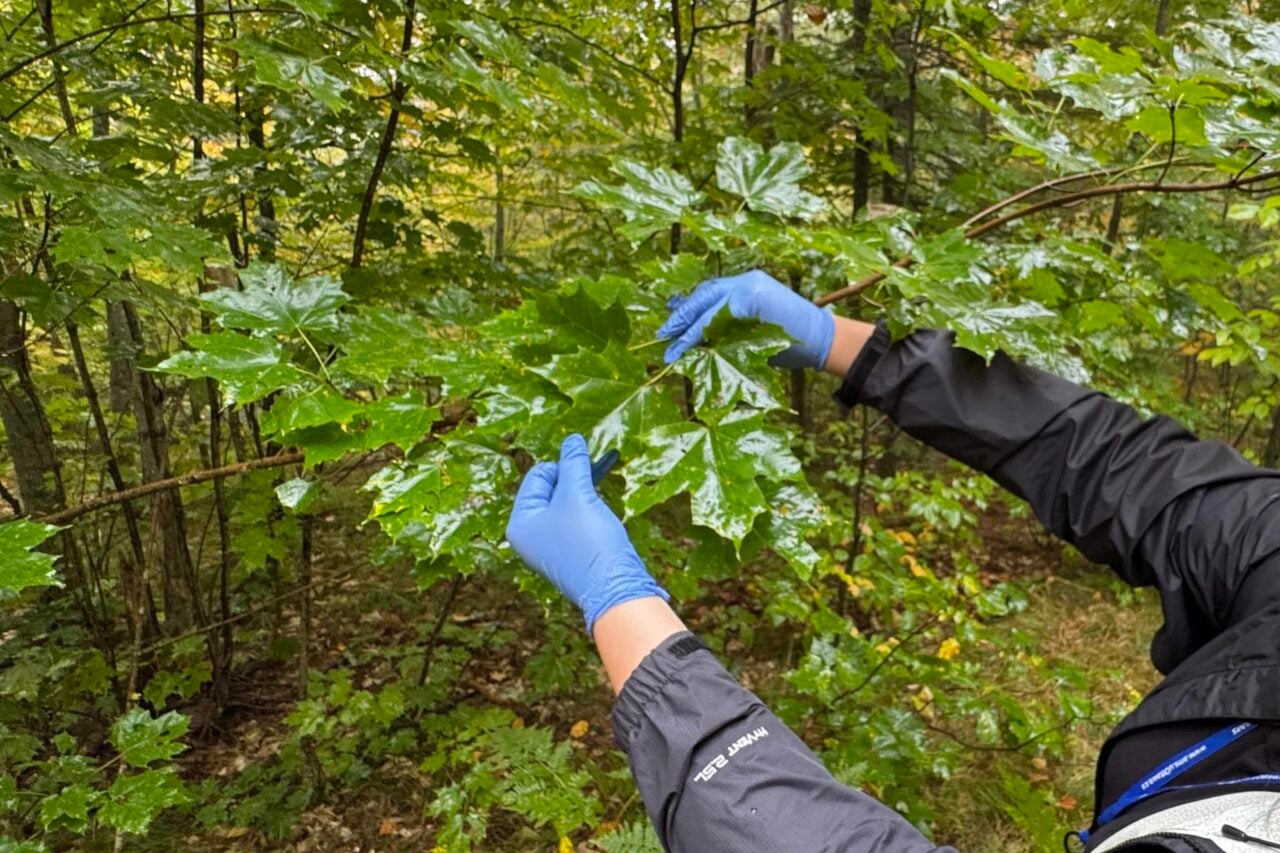
In Quebec’s Gatineau Park, across the river from Ottawa, this bomb-pulse carbon-14 recorded in sugar maple leaves reached its highest saturation at 842 parts per thousand above the reference level in 1964, as recorded by the Geological Survey of Canada. But, mysteriously, these maples’ carbon-14 ratios did not drop back down to their pre-Cold War baseline for over six decades—roughly two years after the rest of Earth’s surrounding atmosphere got back to normal. Now researchers at the University of Ottawa have finally figured out why.

Why Solving Murders Is Going to Get a Lot Harder

“Plants often use older carbon, stored from previous years, to grow new leaves,” Leonard Wassenaar, a geoscientist at the university, explained in a statement.


In brief

Scientists call it the “bomb pulse. The tests dramatically altered the isotopic composition of Earth’s atmosphere, doubling its carbon-14 levels. Neutrons radiating from these blasts collided with nitrogen gas, transforming some of them into carbon-14 and forming traceable patterns across the planet’s carbon cycle for decades, nearly doubling global levels of this radiocarbon at the bomb pulse’s peak.

This is the opening of the story, shared with credit to Gizmodo. The rest of the report — with every detail — continues on the publisher’s website.

Continue reading at Gizmodo ↗

Cookie settings

Choose which cookies we may use. You can change this at any time from Cookie settings in the footer. Details of each cookie are in the Cookie Policy.

Strictly necessary

Needed for sign-in, security, payments and remembering these choices. Always on.

Preferences

Remember settings such as dark mode.

Analytics & performance

Help us count visits, understand which pages, devices and countries our readers use, and measure how well the site performs – anonymous and aggregated.

Advertising & marketing

Lets advertising partners show and personalise adverts, measure impressions, clicks and visits, prevent ad fraud and pay us – this is how the free site is funded.

🔔 News notifications

Get headlines from NewsHub on this device — even when the site is closed.

You can switch this off at any time. Works on Android, Windows, Mac and Linux browsers; on iPhone/iPad add the site to your Home Screen first.