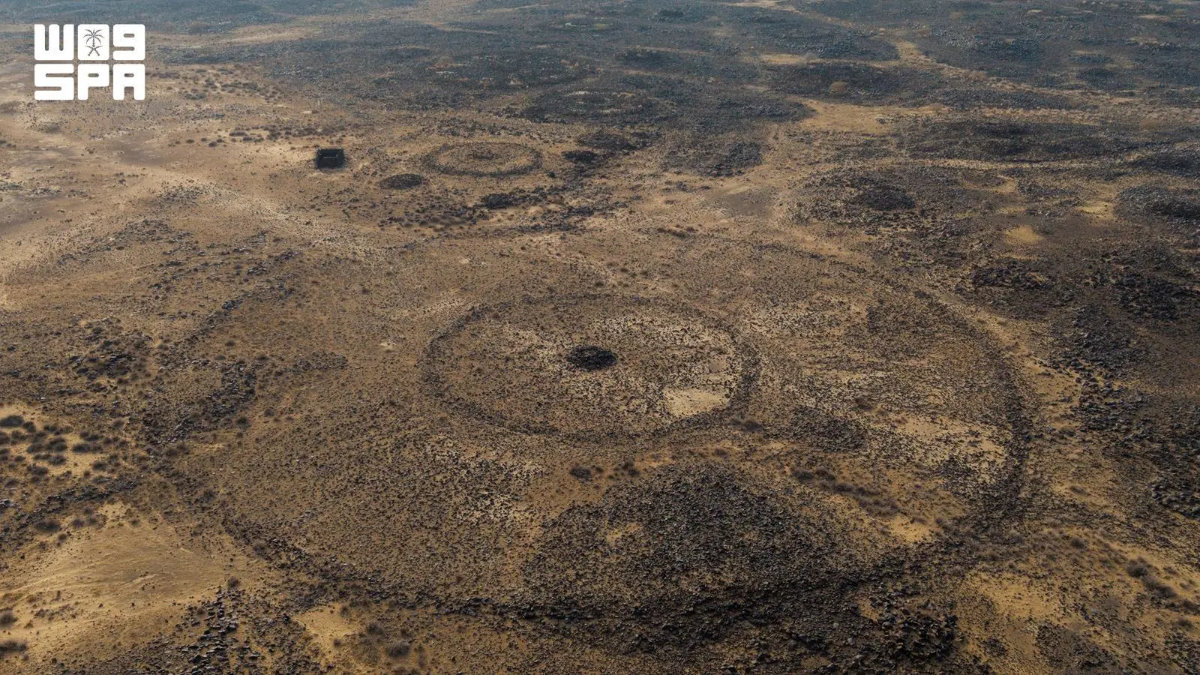
JEDDAH: Interlocking circular stone formations discovered through aerial imagery in Al-Qunfudhah governorate, in southwestern Saudi Arabia, have drawn researchers' attention to a potentially ancient site whose unusual geometric patterns may have served a mathematical or astronomical purpose.
Photographs captured by the Saudi Press Agency (SPA) in the Hali area of Al-Qunfudhah show rings of varying sizes and configurations built from local volcanic rock, forming overlapping patterns that are difficult to distinguish from ground level.
Historian and researcher Dr. Mohammed Al-Marhabi told SPA that the precision and arrangement of the formations suggest deliberate design rather than random placement. He said their layout does not indicate residential or burial use and proposed that they may have been used to observe weather patterns, seasonal changes or celestial movements.
Al-Marhabi linked the formations to Hali's long history of human settlement, noting that its fertile valley was an important population center with historical ties to Makkah. Local communities also had traditions of tracking seasons and calendars, he said.
He called for specialized archaeological research to establish the structures' origins and function.
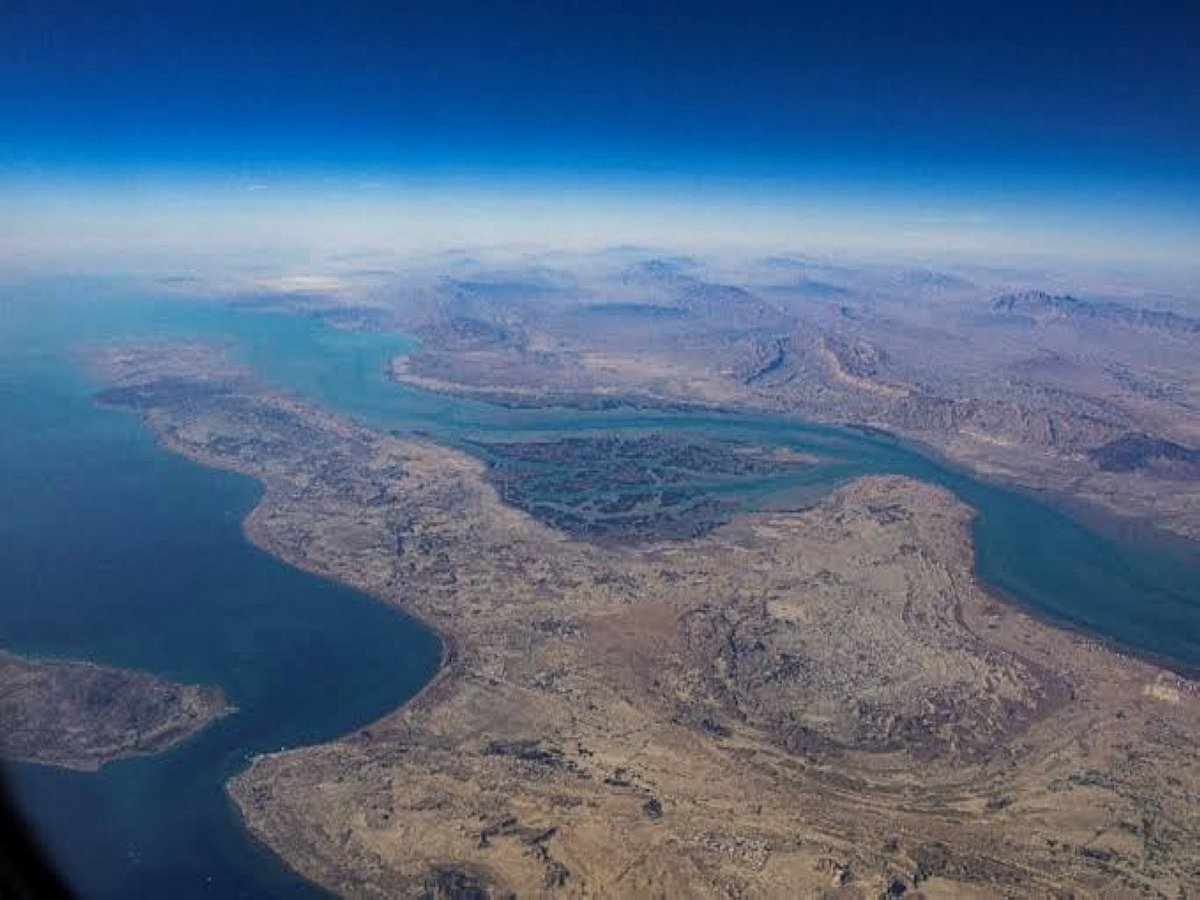
Al-Qunfudhah lies along Saudi Arabia's Red Sea coast in the Tihamah region of Makkah Province, south of Jeddah. Hali is among the historically significant valleys in the area.
The discovery adds to a growing body of archaeological evidence showing that ancient communities across the…