📰 Newspapers

Gen Z protests: Do Baby Boomers really have it better than young people?

Gen Z protests: Do Baby Boomers really have it better than young people?

Should young people in Germany be more worried about their future than Baby Boomers were in the 1980s and 1990s? Or should both generations take to the streets and protest together? DW checked the data.

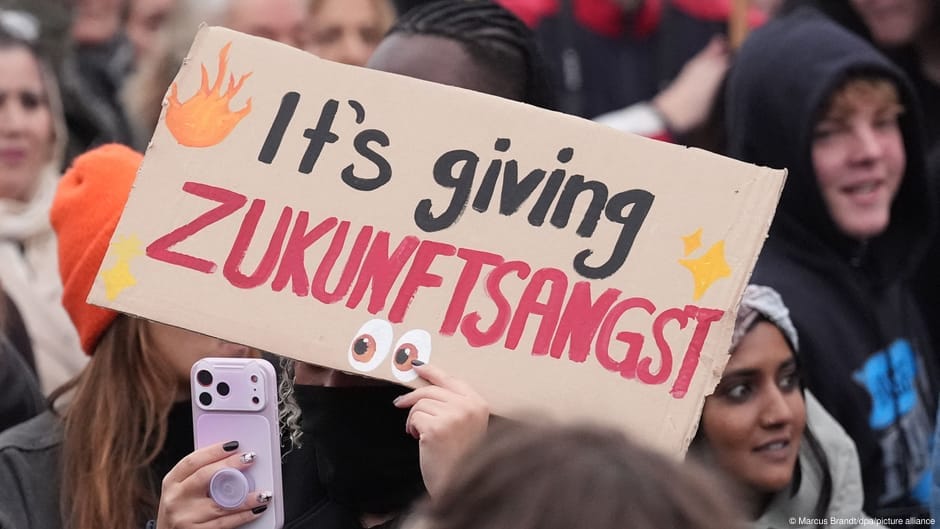
Young people across Germany and Europe are taking to the streets, voicing fears of a bleak future.

But is that really the case? Does Gen Z face greater challenges than Baby Boomers did in the 1990s? What do the two generations have in common, and where do their experiences differ?

"Of course, it's fair to ask, 'Were things just as tough for you back then?'" youth researcher Simon Schnetzer tells DW. "But young people see that things are difficult for them now, and say that's why they need support today."

Schnetzer, who wrote the annual Youth in Germany study, highlights one key question raised by the recent demonstrations across Europe as: "Have we given young people the conditions they need to live and work here with confidence, and to keep this system funded?"

His straightforward answer is no. A survey of the statistics shows that both Gen Z and the Baby Boomers are affected by major societal changes, but in different ways. DW surveyed data on pensions, education, housing and climate change to find out more.

The facts point to a clear trend: Fewer and fewer young people are having to support an ever-growing number of retirees. According to the Germany's public pension insurance system, there were 3.73 contributors for every retiree in 1957.

In brief

Young people across Germany and Europe are taking to the streets, voicing fears of a bleak future. "But young people see that things are difficult for them now, and say that's why they need support today. The facts point to a clear trend: Fewer and fewer young people are having to support an ever-growing number of retirees.

This is the opening of the story, shared with credit to DW — Top stories. The rest of the report — with every detail — continues on the publisher’s website.

Continue reading at DW — Top stories ↗

Cookie settings

Choose which cookies we may use. You can change this at any time from Cookie settings in the footer. Details of each cookie are in the Cookie Policy.

Strictly necessary

Needed for sign-in, security, payments and remembering these choices. Always on.

Preferences

Remember settings such as dark mode.

Analytics & performance

Help us count visits, understand which pages, devices and countries our readers use, and measure how well the site performs – anonymous and aggregated.

Advertising & marketing

Lets advertising partners show and personalise adverts, measure impressions, clicks and visits, prevent ad fraud and pay us – this is how the free site is funded.

🔔 News notifications

Get headlines from NewsHub on this device — even when the site is closed.

You can switch this off at any time. Works on Android, Windows, Mac and Linux browsers; on iPhone/iPad add the site to your Home Screen first.