
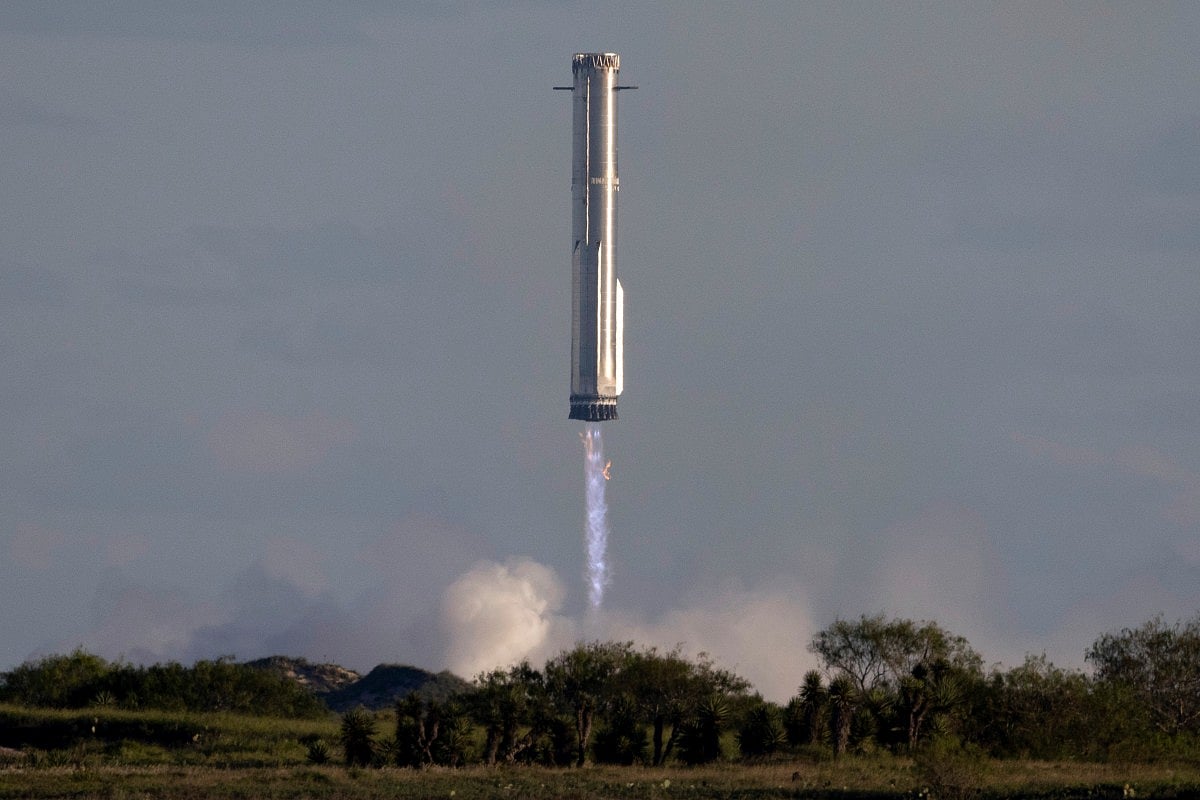
An unspecified problem forced Elon Musk's SpaceX on Friday to abort the recovery of the booster for the world's biggest and most powerful rocket, the Starship, but the company hoped it could yet pull off its first "catch" of the spaceship.
The 124-metre Starship roared into the sky from Starbase in southern Texas for its 15th test flight, but minutes later, the landmark nature of the mission went awry.
Get updated faster and for FREE: Download the Gulf News app now - simply click here.
After lift-off and the mid-air separation of the two stages, an issue with the Super Heavy booster forced SpaceX to divert it to an "offshore splashdown" — scuttling what would have been a groundbreaking twin capture of both components of the rocket.
A fireball erupted as the booster fell into the Gulf of Mexico near the launch site, with a section sticking out vertically afterward.
"Not sure right now why we weren't able to bring it back," SpaceX's Dan Huot said.
Meanwhile, the Starship spacecraft that gives the rocket system its name entered Earth's orbit, where it was expected to circle the globe 14 times before returning Saturday.
"Starship and its heatshield are healthy as the vehicle continues to orbit Earth," SpaceX said around seven hours after the mission started.
