
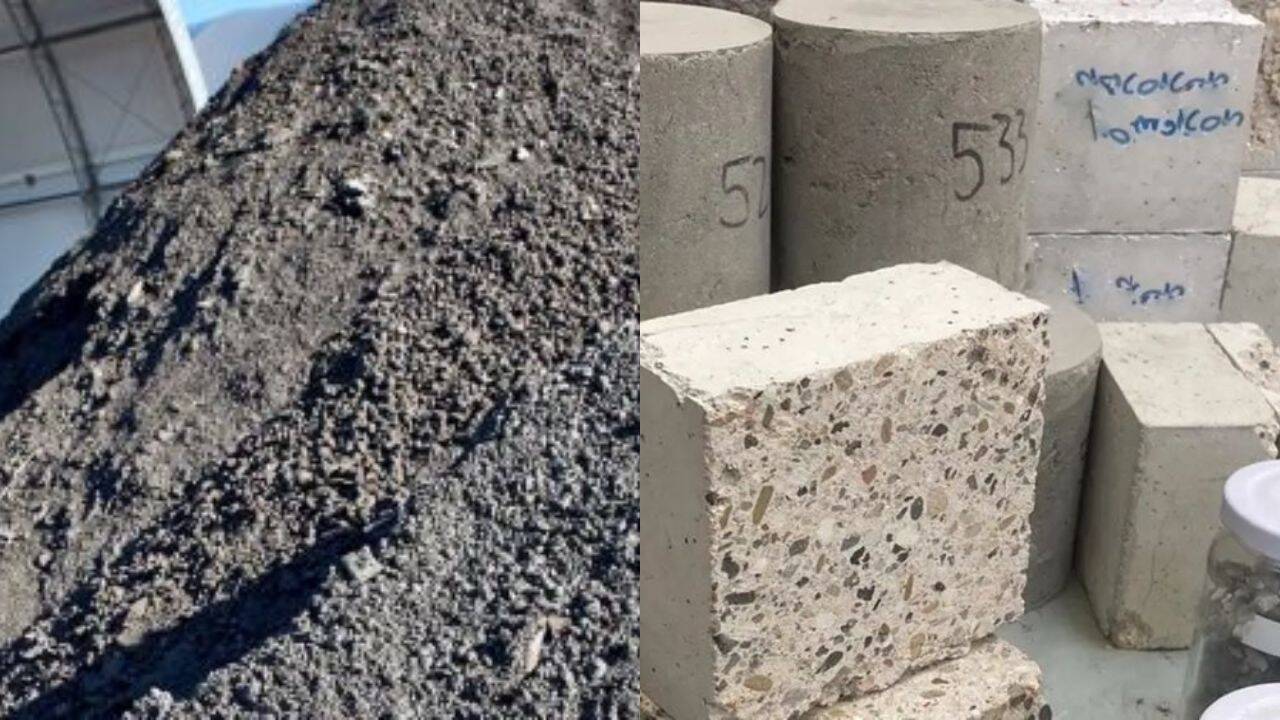
Germany produces around 6 million tonnes of ash from municipal waste incineration every year, leaving behind a substantial residue that requires careful treatment. Researchers are now investigating whether this material can serve a useful purpose beyond waste management. A project involving TH Köln(Cologne University of Applied Sciences) and RWTH Aachen University is testing methods to make the ash absorb and permanently retain carbon dioxide, potentially transforming it into a resource for road construction and concrete production. The approach could also reduce the need for construction materials extracted through energy-intensive processes.How Germany is turning waste ash into a carbon-storing construction materialThe research centres on bottom ash, the mineral-rich residue left after municipal waste is burned. Although it contains materials that could be useful in construction, untreated incineration ash is considered hazardous because it can contain heavy metals, toxic dioxins, furans and soluble salts, according to Engineers Ireland.The residue is therefore not directly suitable for use in building projects. Before it can become a potential construction resource, it must undergo processing to recover metals and remove unwanted contaminants.TH Köln explains that specialised facilities already handle this material through metal recovery, screening and sorting. These steps produce a cleaned ash that can be examined for further applications.The researchers are now exploring whether the mineral components in this processed residue can also help address…
Germany tests carbon-storing waste ash for roads and concrete
In brief
Germany produces around 6 million tonnes of ash from municipal waste incineration every year, leaving behind a substantial residue that requires careful treatment. The approach could also reduce the need for construction materials extracted through energy-intensive processes.How Germany is turning waste ash into a carbon-storing construction materialThe research centres on bottom ash, the mineral-rich residue left after municipal waste is burned.
This is the opening of the story, shared with credit to The Times of India — World. The rest of the report — with every detail — continues on the publisher’s website.
Continue reading at The Times of India — World ↗