📰 Newspapers

New facilities in Laos and Cambodia: Is China expanding its military presence in Southeast Asia?

New facilities in Laos and Cambodia: Is China expanding its military presence in Southeast Asia?

China has been growing its economic relationships in Southeast Asia. Now new military facilities in Laos and Cambodia are causing smaller countries to worry China's military networks are also expanding.

It's often said that maintaining good relations with your neighbors is essential. So in early November, China's Foreign Minister Wang Yi invited his counterparts from Laos, Cambodia, Vietnam, Thailand and Myanmar to Beijing.

There the six countries agreed on closer economic and security cooperation.

The visit is just one example of China's growing influence on Southeast Asia. It's not just about trade or infrastructure either, it's also increasingly about military cooperation.

For instance, at the end of September, China and Laos opened a joint military support and training center north of the Laotian capital, Vientiane. Initially Laotian air force pilots are to be trained at the Ban Keun airfield, China has said.

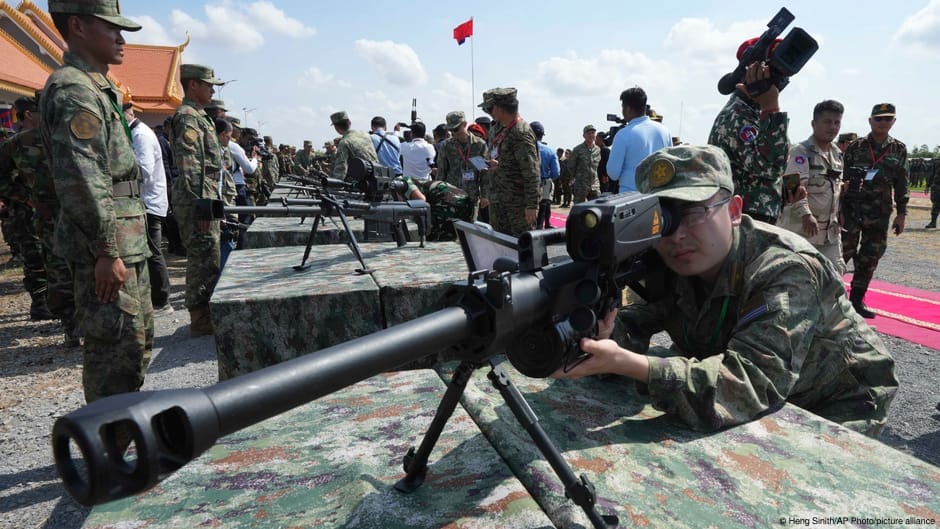
Earlier in 2025 China expanded its footprint at Cambodia's Ream naval base. China uses the facility on the Gulf of Thailand for logistics and training. And while Japanese and Vietnamese ships can visit the port, they're docked at a southern quay and it's unclear if other navies can use the same facilities under the same conditions as China.

"It remains to be seen how this [Ban Keun] will change China's military access to Southeast Asia," says Marco Bünte, a professor of Asian politics at the University Erlangen Nuremberg in Germany.

In recent years, China has significantly expanded its economic influence in the region.

In brief

It's often said that maintaining good relations with your neighbors is essential. The visit is just one example of China's growing influence on Southeast Asia. Earlier in 2025 China expanded its footprint at Cambodia's Ream naval base. In recent years, China has significantly expanded its economic influence in the region.

This is the opening of the story, shared with credit to DW — Top stories. The rest of the report — with every detail — continues on the publisher’s website.

Continue reading at DW — Top stories ↗

Cookie settings

Choose which cookies we may use. You can change this at any time from Cookie settings in the footer. Details of each cookie are in the Cookie Policy.

Strictly necessary

Needed for sign-in, security, payments and remembering these choices. Always on.

Preferences

Remember settings such as dark mode.

Analytics & performance

Help us count visits, understand which pages, devices and countries our readers use, and measure how well the site performs – anonymous and aggregated.

Advertising & marketing

Lets advertising partners show and personalise adverts, measure impressions, clicks and visits, prevent ad fraud and pay us – this is how the free site is funded.

🔔 News notifications

Get headlines from NewsHub on this device — even when the site is closed.

You can switch this off at any time. Works on Android, Windows, Mac and Linux browsers; on iPhone/iPad add the site to your Home Screen first.