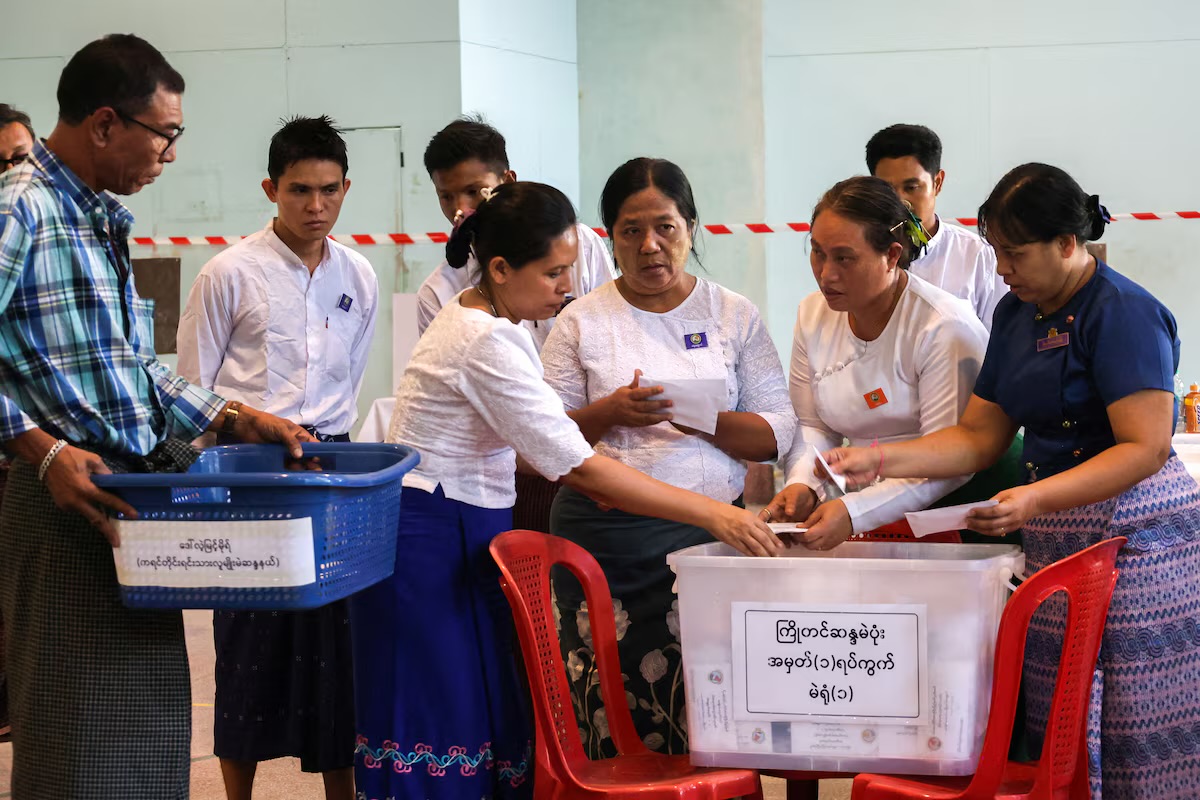
Myanmar’s announcement that it will hold by-elections in 55 constituencies next April appears, at first glance, to be a relatively minor electoral development. The seats include 34 in the lower house, five in the upper house and 16 in state or regional legislatures. The vote will also take place in areas that could not participate in the previous election because of conflict, including at least seven towns recently recaptured by the military.
The results are unlikely to transform parliament. The military-backed Union Solidarity and Development Party and its allies already dominate the legislature after winning nearly 90 percent of seats in January’s general election. That is precisely why the April 2027 vote matters for reasons that have relatively little to do with who wins.
In a fragmented civil war, an election can do more than choose representatives. It can become an instrument for turning military control into political sovereignty.
There are three different forms of control at stake in a conflict such as Myanmar’s. The first is coercive control: can an armed force enter and hold a town. The second is administrative control: Can it reopen government offices, register residents, secure roads and make institutions function. The third is political legitimacy: Do people accept the authority claiming the right to govern them?