📰 Newspapers

Entangled Past: how descendants of enslaved and enslavers in Grenada embarked on journey of repair

Entangled Past: how descendants of enslaved and enslavers in Grenada embarked on journey of repair

In their book, the historian Nicole Phillip and journalist Laura Trevelyan use connected experiences to show how reparations can work in practice

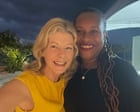
When the Grenadian historian Nicole Phillip opened an email from the then BBC journalist Laura Trevelyan in 2022, she uncovered a connection that stretched back centuries.

Their ancestors had stood on opposite sides of enslavement in Grenada: Phillip’s among Africans forcibly taken from their homes and enslaved, Trevelyan’s among the British families who profited from a system that inflicted unspeakable cruelty and inhumanity on generations of enslaved Africans.

That email sparked a journey of acknowledgment, reconciliation and repair that Phillip and Trevelyan say powerfully illustrates how slavery reparations can work in practice. Their new book, Entangled Past, outlines that journey and argues that their experience can offer a model for others.

The book was published in the same week that the UK prime minister, Andy Burnham, said he was open to a formal British apology while ruling out financial reparations, and announced that Britain would enter a structured dialogue with the Caribbean, which is due to take place over the next year.

It describes the Trevelyan apology, the first of its kind in the British Caribbean, as “a concrete example of what can be achieved, when descendants of the enslaved and descendants of enslavers sit down together and…

In brief

In their book, the historian Nicole Phillip and journalist Laura Trevelyan use connected experiences to show how reparations can work in practice When the Grenadian historian Nicole Phillip opened an email from the then BBC journalist Laura Trevelyan in 2022, she uncovered a connection that stretched back centuries. That email sparked a journey of acknowledgment, reconciliation and repair that Phillip and Trevelyan say powerfully illustrates how slavery reparations can work in practice.

This is the opening of the story, shared with credit to The Guardian — Americas. The rest of the report — with every detail — continues on the publisher’s website.

Continue reading at The Guardian — Americas ↗

Cookie settings

Choose which cookies we may use. You can change this at any time from Cookie settings in the footer. Details of each cookie are in the Cookie Policy.

Strictly necessary

Needed for sign-in, security, payments and remembering these choices. Always on.

Preferences

Remember settings such as dark mode.

Analytics & performance

Help us count visits, understand which pages, devices and countries our readers use, and measure how well the site performs – anonymous and aggregated.

Advertising & marketing

Lets advertising partners show and personalise adverts, measure impressions, clicks and visits, prevent ad fraud and pay us – this is how the free site is funded.

🔔 News notifications

Get headlines from NewsHub on this device — even when the site is closed.

You can switch this off at any time. Works on Android, Windows, Mac and Linux browsers; on iPhone/iPad add the site to your Home Screen first.