

The ongoing project to make Jerusalem’s Old City accessible has reached the ancient Christian Quarter Road, which dates back to around 135 CE, when Jerusalem was known as Aelia Capitolina under the Romans.The project, which began planning in 2009 and was formally inaugurated a decade later, aims to make the 1,900-year-old street accessible to wheelchairs and strollers while conserving the original stonework. It is spearheaded by the Jerusalem Affairs Ministry, alongside the Jerusalem Municipality’s Accessibility Department, the Israel Antiquities Authority (IAA), and is being carried out by the East Jerusalem Development Ltd. (PAMI).All the work is being conducted with the guidance of accessibility consultants and within local topographical constraints. Water and electricity infrastructure will also be replaced under the project.Since the beginning of the work, the Old City of Jerusalem has become one of the most accessible historic cities in the world, with some six kilometers of alleyways being made accessible in an area of roughly a square kilometer surrounded by the city’s walls.Moving history without losing itWork on the Roman pavement of the Christian Quarter Road first began in 1977, carried out by the Jerusalem Municipality and PAMI as part of infrastructure improvements and market rehabilitation in the Old City.Archaeologists Shlomo Margalit, Doron Chen and Giora Solar uncovered the remains of a Byzantine-era road hidden at a depth of…
In historic first, Old City of Jerusalem’s Roman-era street to be made wheelchair accessible
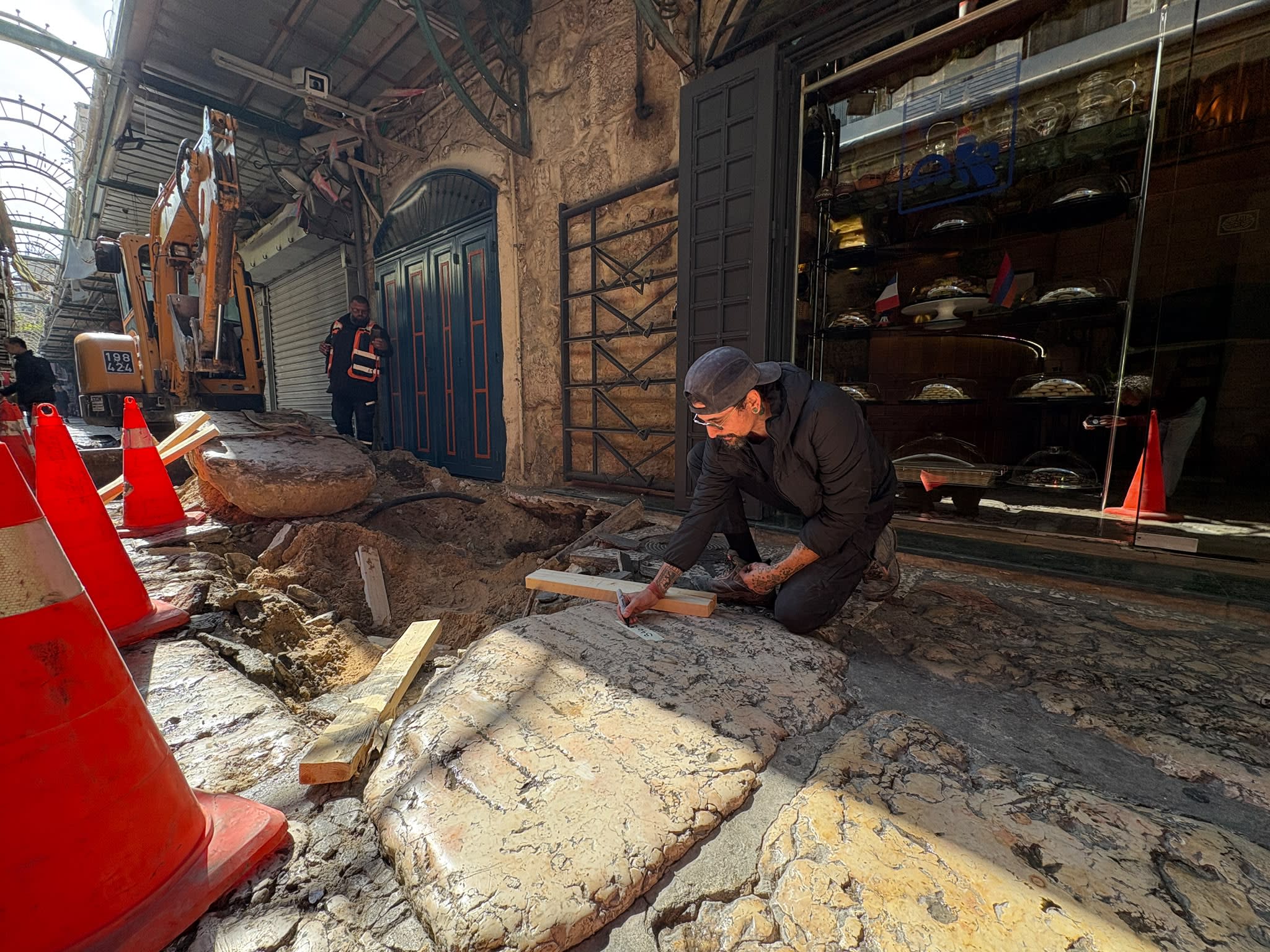
Work on the Roman pavement of the Christian Quarter Road first began in 1977, carried out by the Jerusalem Municipality and PAMI as part of infrastructure improvements in the Old City.
In brief
The ongoing project to make Jerusalem’s Old City accessible has reached the ancient Christian Quarter Road, which dates back to around 135 CE, when Jerusalem was known as Aelia Capitolina under the Romans.The project, which began planning in 2009 and was formally inaugurated a decade later, aims to make the 1,900-year-old street accessible to wheelchairs and strollers while conserving the original stonework. It is spearheaded by the Jerusalem Affairs Ministry, alongside the Jerusalem Municipality’s Accessibility Department, the Israel Antiquities Authority (IAA), and is being carried out by the East Jerusalem Development Ltd. (PAMI).All the work is being conducted with the guidance of acc…
This is the opening of the story, shared with credit to The Jerusalem Post. The rest of the report — with every detail — continues on the publisher’s website.
Continue reading at The Jerusalem Post ↗