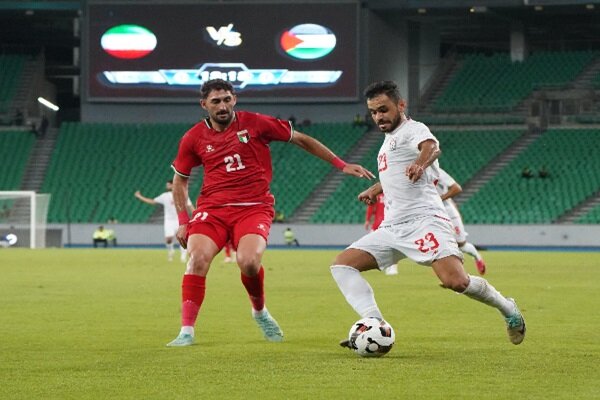
TEHRAN - Iran’s 2-0 victory over Palestine in Basra offered encouraging signs of a generational transition, but it also exposed a familiar weakness: the national team still need greater attacking variety and, more importantly, stronger opposition to measure their progress.
With an average age four years lower than the side that lost to Russia in the previous international break, Amir Ghalenoei’s team used the opening game of the Basra tournament to give younger players a chance. Five of them – goalkeeper Mohammad Khalifeh, Mohammad Farabasi, Ali Gholizadeh, Hossein Goudarzi and Afshin Sadehgi – made their international debuts, while the coach gave playing time to 22 of his 29 squad members.
There were positives. Hosseinnejad and Goudarzi showed promise, and the latter made a decisive contribution after coming off the bench. His two excellent crosses led to goals from Sardar Azmoun and Saleh Hardani, securing the win in the closing stages.
Yet the result should not disguise the limitations of Iran’s performance. Palestine were reduced to 10 men in the 66th minute, and Iran had struggled to break through their defensive organization before that. The two goals came after the dismissal, with crosses from wide areas once again proving the most effective attacking route.
Iran created chances and might have scored more, but their reliance on crosses highlighted a lack of…