

Archaeologists working in Beijing have uncovered the first confirmed remains of a Sui Dynasty section of the Great Wall in the Chinese capital. The discovery, made at the Dalinggou site in Changping district, is reshaping what researchers understand about the earliest defences around ancient Beijing. Alongside it, archaeologists have revealed three wooden boats about 1,800 years old, offering an unusually vivid picture of life, trade and transport in the region long before it became a modern metropolis.The Great Wall is often imagined as one vast, unbroken barrier. In reality, it was a shifting network of walls, watchtowers, garrisons and roads built, repaired and expanded by different states over many centuries. The new find matters because it adds a missing piece to that story: evidence that the Sui Dynasty, which ruled from 581 to 618, maintained a military presence on Beijing’s northern edge.A frontier outpost comes into viewThe excavation took place between August and October 2026, covering roughly 800 square-metres at Dalinggou in Changping. Archaeologists from the Beijing Institute of Archaeology uncovered the remains of a military outpost built against an early section of the Great Wall. Its northern wall was incorporated into the existing wall structure, while inside the enclosure were traces of buildings and retaining walls.The walls were made largely from roughly hewn stones bound and filled with loess…
Archaeologists digging in Beijing have found the first Great Wall remains from the Sui dynasty
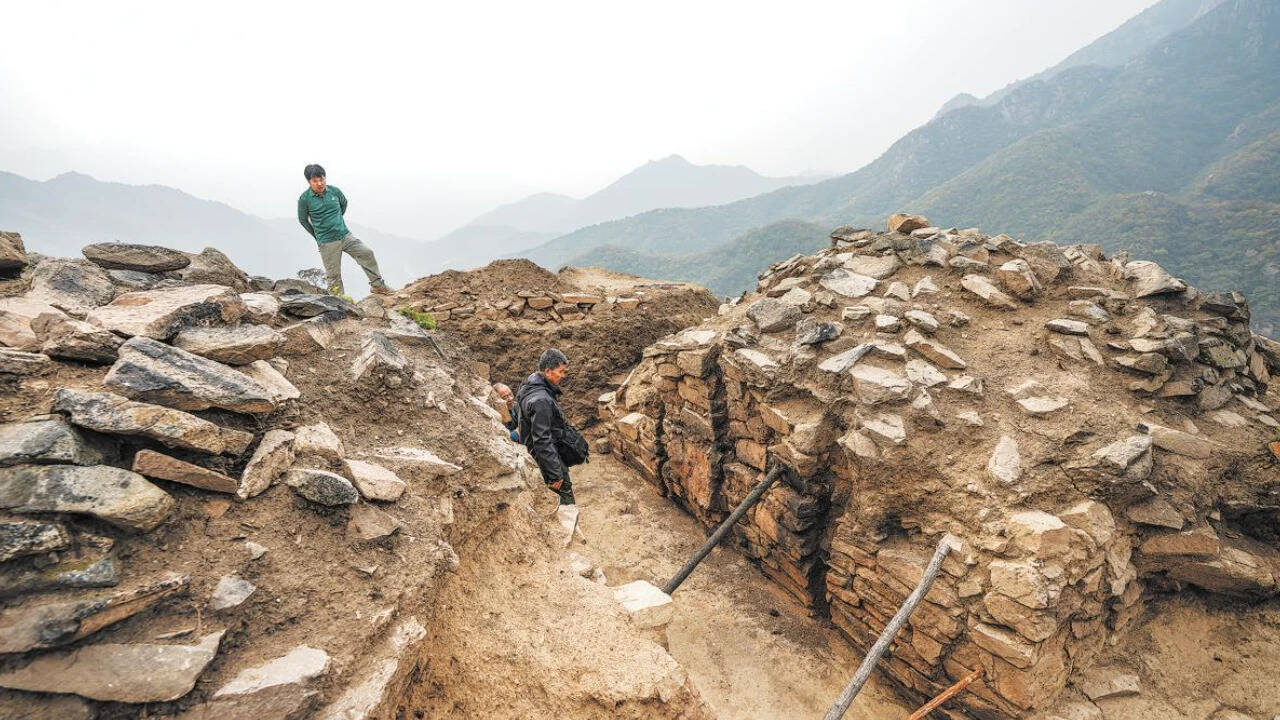
Recent archaeological discoveries in Beijing have unearthed remnants of the Great Wall from the Sui Dynasty, revolutionizing our understanding of its historical context. This find emphasizes the wall's role as a military outpost on the northern frontier. Additionally, three ancient wooden boats, dating back approximately 1,800 years, were recovered in Fengtai district, showcasing an early transport network in…
In brief
Archaeologists working in Beijing have uncovered the first confirmed remains of a Sui Dynasty section of the Great Wall in the Chinese capital. Archaeologists from the Beijing Institute of Archaeology uncovered the remains of a military outpost built against an early section of the Great Wall. Its northern wall was incorporated into the existing wall structure, while inside the enclosure were traces of buildings and retaining walls.The walls were made largely from roughly hewn stones bound and filled with loess…
This is the opening of the story, shared with credit to The Times of India — World. The rest of the report — with every detail — continues on the publisher’s website.
Continue reading at The Times of India — World ↗

