

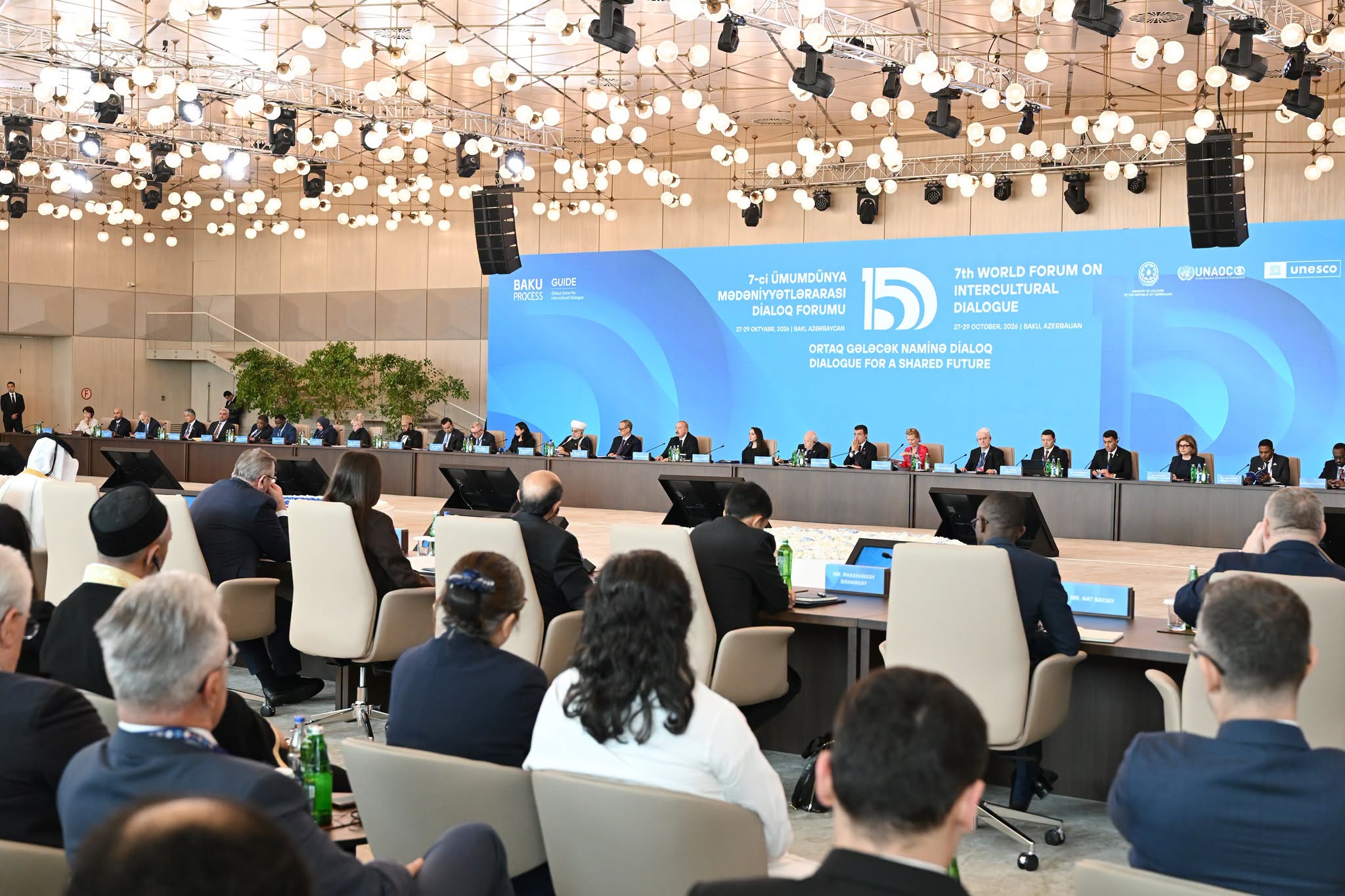
At the recent World Forum on Intercultural Dialogue in Baku, I heard Muslim leaders speak about Israelis and Palestinians with a balance too rarely heard in American public discourse.
They defended the rights and dignity of the Palestinian people while recognizing Israel’s right to live in peace. They spoke about Jews and Muslims as peoples whose futures are bound together. They presented coexistence as a religious and moral obligation rather than a political concession.
As an American rabbi who has spent more than two decades building Muslim-Jewish relations, I was encouraged by what I heard.
American perceptions of Islam are too often shaped by conflict, extremism and some of the most radical voices claiming to speak for Muslims. And too often in America, Muslim leaders discuss Palestinians’ rights at the expense of the Israeli state. The Muslim leaders I encountered in Baku represented another expression of Islam, one rooted in tolerance, mutual respect and understanding. Americans deserve to know it.
The seventh World Forum on Intercultural Dialogue, held under the theme “Dialogue for a Shared Future: Building Bridges in a Fractured World,” brought together political officials, religious leaders and representatives of international organizations. Azerbaijan created space for disagreements to be expressed without allowing those disagreements to become dehumanization.
The distinction matters most when discussing Israelis and Palestinians.