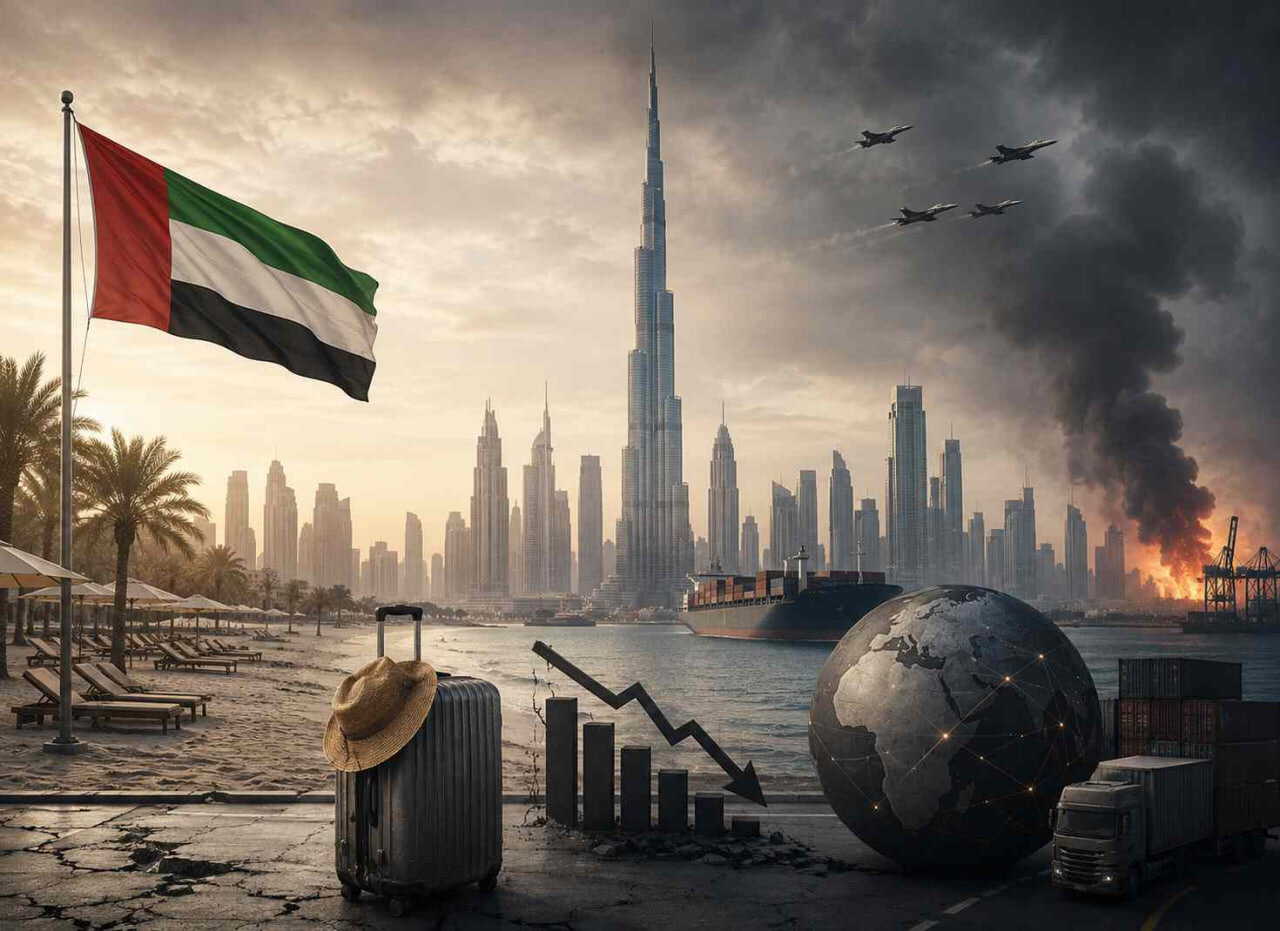
TEHRAN -- The economic consequences of the war against Iran are beginning to appear in figures that the Emirati leadership can hardly afford to ignore. For a country that has spent decades building its reputation as a regional hub for tourism, trade, investment and international business, the latest economic projections offer a sobering reminder: regional instability comes at a price, and those who help create it are not necessarily spared its consequences.
According to a recent assessment by international credit rating agency Fitch, Dubai's economy is expected to contract by nearly 5 percent in 2026 as a result of the repercussions of the war with Iran. The UAE's overall economic growth, meanwhile, is forecast to remain at just 0.5 percent. The agency has also reported a decline in the country's foreign-exchange reserves, from more than $300 billion in February to $265 billion in August.
The damage has been particularly pronounced in the non-oil economy, with disruptions to trade, transportation, manufacturing and tourism weighing heavily on economic activity. These are not peripheral sectors for the Emirates. They are central to the economic model that Abu Dhabi and Dubai have spent years promoting to the international community.
For the Emirati leadership, these figures should prompt a serious examination of the relationship between its regional policies and its own economic interests.