

A badly damaged silver coin dating back to 1834 may hold clues to an unusual manufacturing accident that occurred nearly two centuries ago. What initially appeared to be an ordinary damaged antique has now become the subject of a scientific investigation, with researchers suggesting that the coin may have been crushed during the original minting process. According to a report published by ScienceDaily on November 11, 2026, the findings are based on a study by IA STUDIO published in the journal npj Heritage Science. Independent coverage by EurekAlert and Science News has also highlighted the unusual physical evidence uncovered during the investigation. The coin, a silver sixpence issued during the reign of King William IV, was discovered in an album containing assorted coins at a car boot sale in Greater Manchester, England. It had been individually marked with a price tag of £8, although the album was eventually purchased as a single lot rather than the sixpence being sold separately. What makes the discovery particularly interesting is the coin’s unusual condition. Its central sections are severely distorted, with much of the original design barely recognisable. However, parts of its outer rim and the grooves along its edge remain surprisingly intact.
Minting Accident: 3D tests suggest sixpence was deformed during minting; cause remains inconclusive
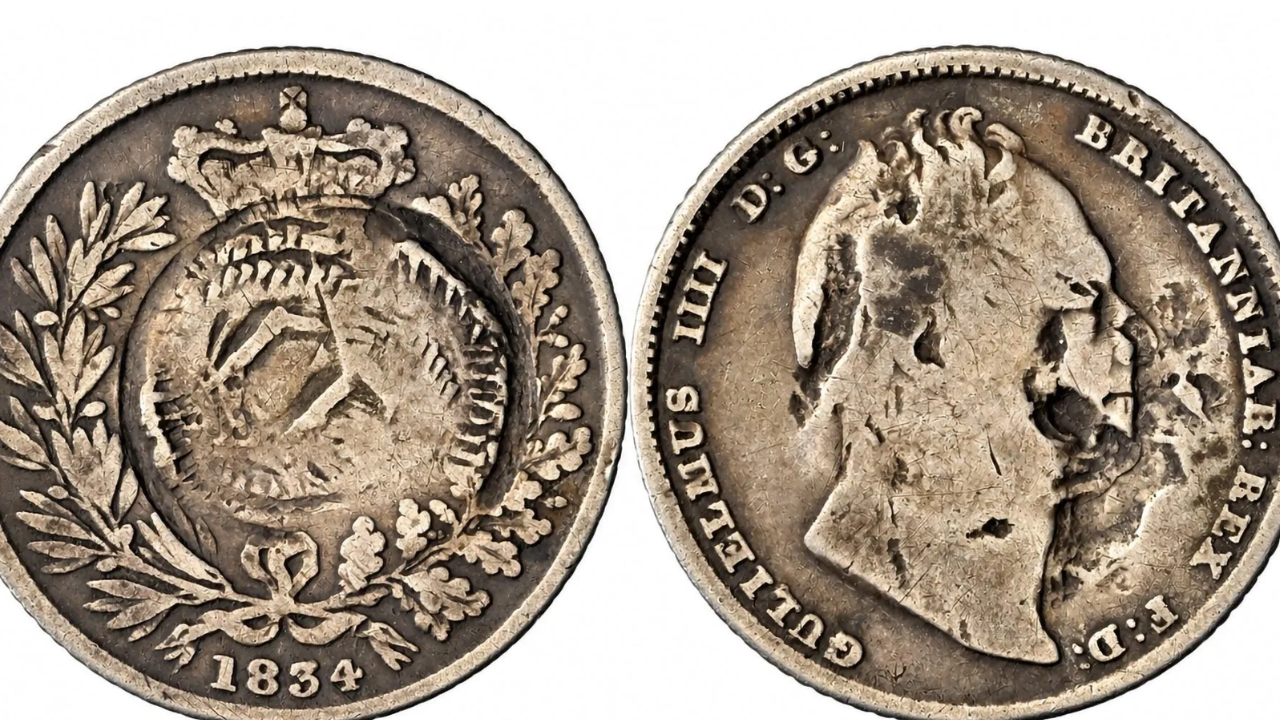
A team of researchers has thoroughly examined a distorted silver sixpence from 1834, uncovering unexpected manufacturing flaws. Through intricate 3D imaging, they revealed significant deformations and patterns that stray from regular wear. This peculiar state of the coin prompts a deeper look into the production methods of the steam-powered minting period. The analysis, combining advanced imaging and chemistry…
In brief
A badly damaged silver coin dating back to 1834 may hold clues to an unusual manufacturing accident that occurred nearly two centuries ago. What initially appeared to be an ordinary damaged antique has now become the subject of a scientific investigation, with researchers suggesting that the coin may have been crushed during the original minting process. Independent coverage by EurekAlert and Science News has also highlighted the unusual physical evidence uncovered during the investigation. What makes the discovery particularly interesting is the coin’s unusual condition.
This is the opening of the story, shared with credit to The Times of India — World. The rest of the report — with every detail — continues on the publisher’s website.
Continue reading at The Times of India — World ↗