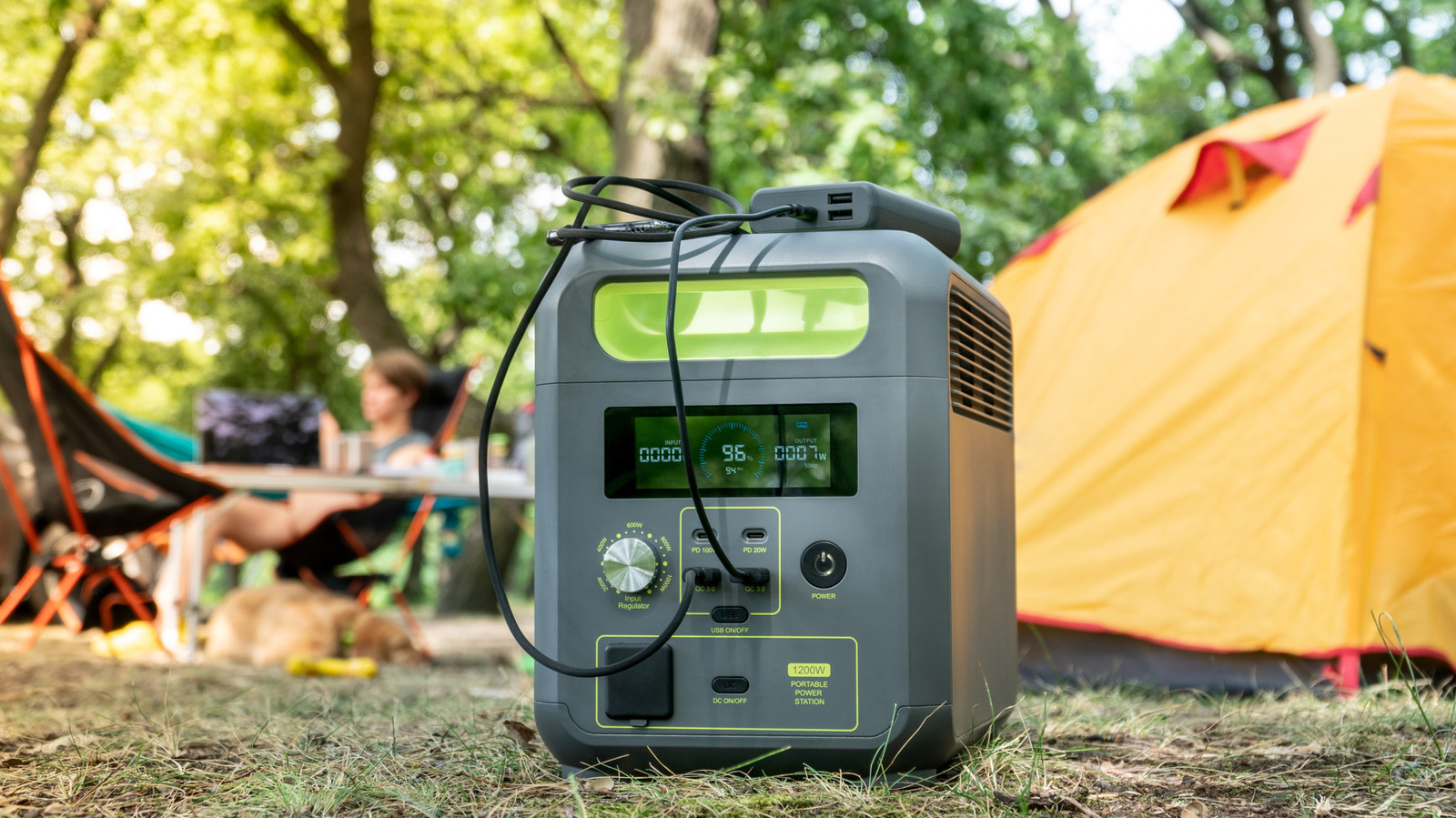
Determining the stamina of your portable power station is more complicated than you might expect.
This is anecdotal, perhaps, but based on the number of ads I'm bombarded with, it feels like portable power stations have become a hot commodity in the last several years. And it makes sense — in a society increasingly dependent on phones and laptops, not to mention other electronics, even the best small power banks just won't cut it during a prolonged outage. And of course, these stations have always had uses outside the home, such as camping or job sites.
A critical question to ask is how much power you actually need. More isn't always better, since a high-end station is not only expensive, but considerably larger and heavier. A multi-kilowatt station might cost as much or more than the devices it's powering and require help to lift if you've been neglecting the gym.
Let's take 1,000Wh (watt-hours) as a baseline. How long can you reasonably expect that to last when the power goes out at home or you're watching YouTube in the Adirondacks? The answer is surprisingly complicated. It depends on what you plug in, how it's actively operating, and how efficient your power station is at converting energy.